Caramelized Specialty Dish: Jammy & Savory
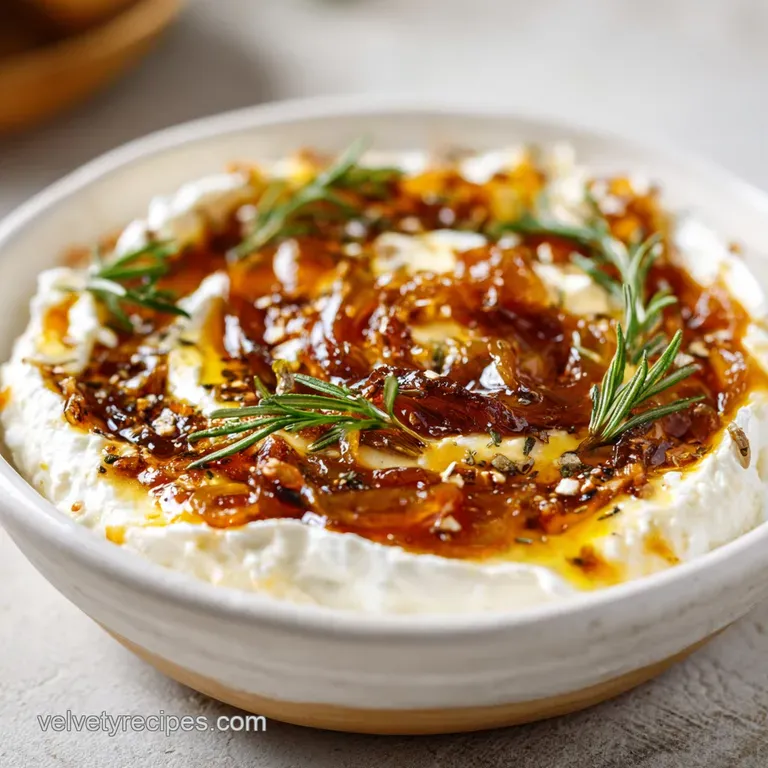
- Time: Active 15 minutes, Passive 50 minutes, Total 1 hours 5 mins
- Flavor/Texture Hook: Jammy, velvety, and deeply savory
- Perfect for: Game day, holiday appetizers, or weekend meal prep
- Mastering My Caramelized Specialty Dish Recipe
- Why These Science Steps Work
- Essential Specs and Timeframes
- Selecting Your Perfect Ingredients
- The Right Tools for Onions
- Executing the Perfect Cook
- Solving Common Texture Mistakes
- Adjusting for Dietary Needs
- Storage and Leftover Ideas
- Pairing Ideas for Your Dip
- Recipe FAQs
- 📝 Recipe Card
Mastering My Caramelized Specialty Dish Recipe
You know that specific, intoxicating scent that hits you the second you walk into a bistro? That deep, sweet, buttery aroma of onions melting into a pan for hours? That’s exactly what we’re chasing today. I remember the first time I tried to rush this.
I cranked the heat, thinking I could "cheat" the process, and ended up with bitter, charred bits that ruined the whole mood. It was a disaster, honestly, but it taught me the most important lesson in the kitchen: patience is a literal ingredient.
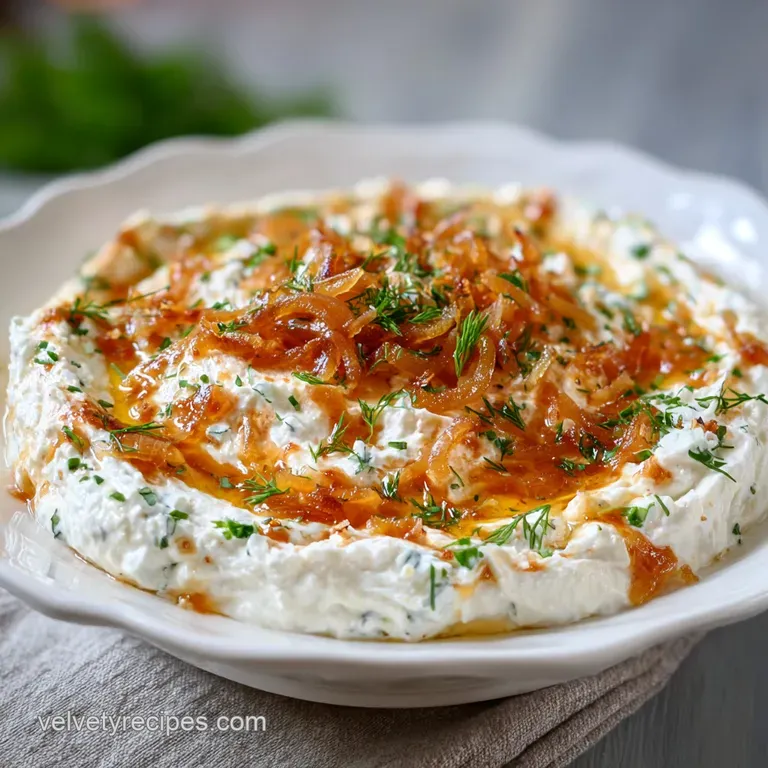
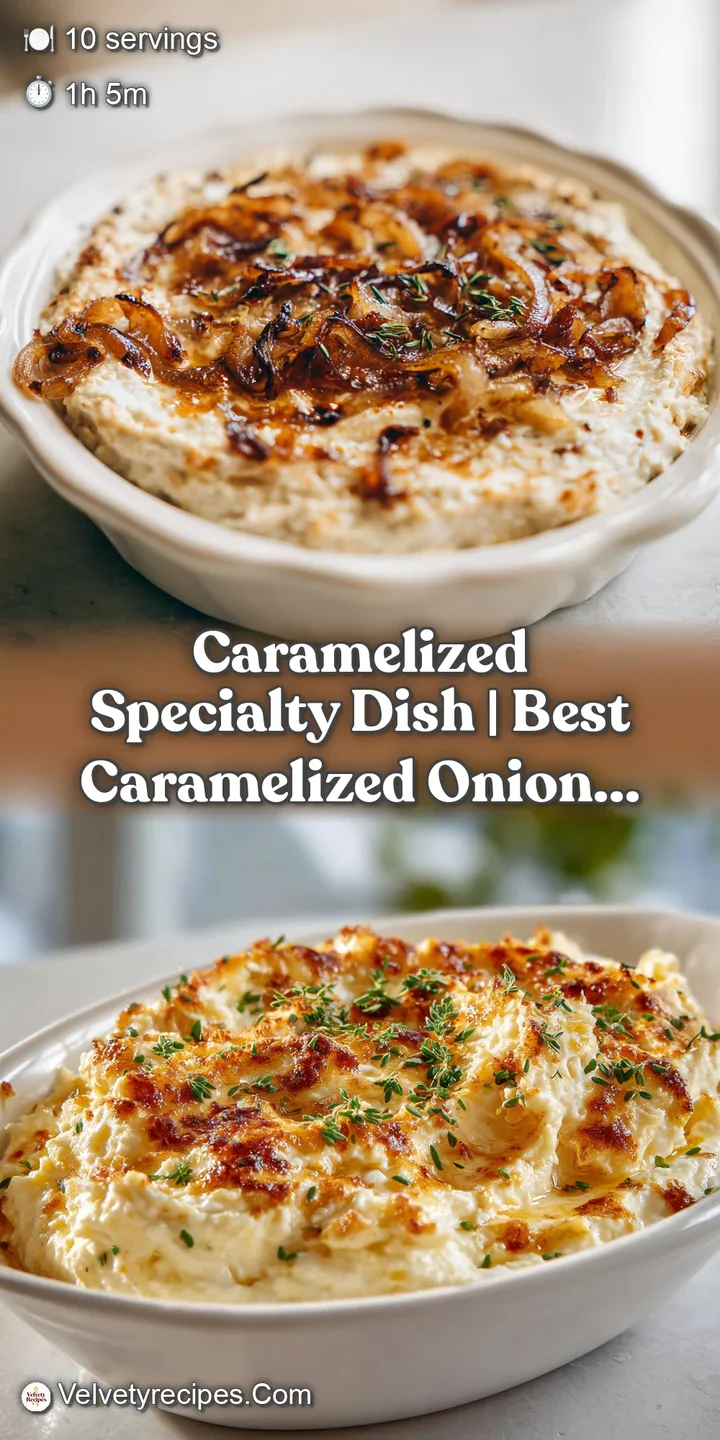
This Caramelized Specialty Dish isn't just a snack; it’s a textural experience. We are talking about onions that have been cooked down until they are practically a preserve, then folded into a whipped feta base that is so silky it feels like a cloud.
The contrast between the warm, mahogany colored onions and the cold, tangy cheese is what makes people go back for seconds, thirds, and fourths. Trust me on this, once you nail the technique, you'll be putting these onions on everything from burgers to toast.
We’ve all seen those store-bought dips that are mostly mayo and salt, right? This is the opposite. It’s rich, it’s complex, and it has that unmistakable homemade soul. Whether you’re hosting a fancy dinner party or just want to feel like a pro chef on a Tuesday night, this is the one.
Let’s get into the nitty gritty of how to make it happen without the usual kitchen stress.
Why These Science Steps Work
Understanding the "how" behind the heat makes you a better cook instantly. We aren't just frying things; we are performing chemistry in a skillet.
- Pyrolysis of Sugars: Cooking onions slowly at a low temperature breaks down complex carbohydrates into simple sugars, creating that deep "Caramelized Perfection" without burning.
- Hygroscopic Salt Effect: Adding kosher salt early draws moisture out of the onion cells through osmosis, which allows them to soften and collapse much faster.
- Deglazing with Water: The small amount of water added mid way lifts the concentrated sugars (fond) off the bottom of the pan and coats every onion slice in flavor.
- Emulsification of Dairy: Whipping the feta with Greek yogurt creates a stable fat in-water emulsion that stays airy and spreadable even when chilled.
| Slice Thickness | Internal Temp | Rest Time | Visual Cue |
|---|---|---|---|
| 1/8 inch | 212°F (boiling) | 5 mins | Onions look translucent and limp |
| Jammy Stage | 310°F (Maillard) | 10 mins | Deep mahogany color, very soft |
| Whipped Base | 40°F (Chilled) | 1 hour | Holds a soft peak on a spoon |
There is a huge debate in the culinary world about whether to do this on the stove or in the oven, but for this specific Caramelized Specialty Dish, the stovetop gives you the control you need to prevent bitterness.
Essential Specs and Timeframes
When we talk about "Caramelized Perfection recipe" standards, the timing is non negotiable. You can't force an onion to caramelize in ten minutes any more than you can force a flower to bloom in an hour.
We are looking at a total commitment of 1 hours 5 mins, but most of that is just you occasionally stirring a pan while your house starts to smell like a five star restaurant.
You’ll want to slice your 3 lbs yellow onions pole to pole. This isn't just for looks; it helps the onion retain its structure so it doesn't turn into mush. If you're feeling adventurous with your baking later, these same savory notes work beautifully alongside sweet treats like a Texas Chocolate Pecan recipe because the saltiness cuts through the sugar.
| Ingredient | Science Role | Pro Secret |
|---|---|---|
| Yellow Onions | Sugar Source | Use yellow, not white, for higher sugar content |
| Greek Feta | Structure | Buy the block in brine; it's creamier than crumbles |
| Greek Yogurt | Moisture | Full fat is mandatory for a velvety mouthfeel |
| Fresh Thyme | Aromatics | Add at the very end to keep the oils bright |
While the onions are doing their thing, the whipped feta base provides the salty backbone. It’s a balance of power where the sweetness of the onions meets the tang of the yogurt and the punch of the garlic.
Selecting Your Perfect Ingredients
- 3 lbs yellow onions: Sliced thinly. Why this? Yellow onions have the ideal balance of sulfur and sugar for long cooking.
- Substitute: Red onions (adds a punchier, slightly more acidic finish).
- 2 tbsp unsalted butter: Why this? Adds milk solids that help the onions brown and taste rich.
- Substitute: Ghee (higher smoke point, still gives that nutty flavor).
- 1 tbsp extra virgin olive oil: Why this? Prevents the butter from burning too quickly during the long cook.
- Substitute: Avocado oil (neutral flavor but very heat stable).
- 8 oz Greek feta cheese: Block form. Why this? Provides the "Specialty Dish" texture that pre crumbled cheese lacks.
- Substitute: Goat cheese (gives a funkier, softer result).
- 0.5 cup full fat Greek yogurt: Why this? Thins the feta into a spreadable, velvety consistency.
- Substitute: Sour cream (slightly thinner but very tangy).
- 1 clove garlic: Microplaned. Why this? Disperses evenly so you don't bite into a raw chunk.
- Substitute: 1/2 tsp garlic powder (milder, more integrated flavor).
- 1 tbsp fresh lemon juice: Why this? Cuts through the heavy fats and brightens the whole palate.
- Substitute: White wine vinegar (sharp and clean acidity).
The Right Tools for Onions
You don't need a kitchen full of gadgets, but a heavy bottomed skillet is your best friend here. A cast iron or a heavy stainless steel pan (like All Clad) distributes heat evenly, which is the secret to avoiding those pesky "hot spots" where onions like to burn.
If you use a thin, cheap pan, you’ll be fighting the heat the whole time.
A microplane is also a game changer for the garlic. You want it to be a paste, not a dice. This ensures the flavor melts into the yogurt rather than standing out too harshly. Finally, a sturdy rubber spatula is essential for scraping up that "gold" (the fond) from the bottom of the pan when you add the water.
It’s like cleaning as you go, but the "dirt" is actually the best part of the recipe.
Executing the Perfect Cook
- Heat the fats. Place the butter and olive oil in a large skillet over medium low heat until the butter stops foaming and smells nutty.
- Add the onions. Toss in all 3 lbs of sliced onions and the kosher salt. Note: It will look like a mountain of onions, but they shrink significantly.
- Softening phase. Cook for 15 minutes, stirring occasionally, until the onions are completely limp and translucent.
- The long brown. Lower the heat slightly and continue cooking for another 20-25 minutes. Listen for a gentle sizzle; it shouldn't be a loud fry.
- Deglaze the pan. Add 0.25 cup water when the bottom starts to brown. Scrape the pan until it's clean and the onions turn golden.
- Final caramelization. Cook for 10 more minutes until the onions are dark mahogany and smell like toasted sugar. Stir in the thyme.
- Whip the cheese. While onions cool, pulse the feta, yogurt, garlic, and lemon juice in a food processor until the mixture is velvety and smooth.
- Combine and chill. Fold half the cooled onions into the feta. Spoon the rest on top as a "Caramelized onion topping" for visual impact.
Chef's Tip: Freeze your feta block for 10 minutes before crumbling it into the processor; it helps the cheese break down into a smoother paste without getting "gummy" from the heat of the blades.
Solving Common Texture Mistakes
Onions Are Sizzling Too Loudly
If you hear an aggressive fry, your heat is too high. High heat evaporates moisture before the sugars can break down, leading to "burnt" rather than "caramelized." Lower the flame and add a splash of water immediately to reset the temperature.
The Dip is Too Salty
Feta is naturally very salty, and as onions reduce, their flavors concentrate. If the final mix is too sharp, fold in an extra tablespoon of Greek yogurt or a drizzle of honey. The sweetness of honey or the creaminess of extra yogurt acts as a buffer for the salt.
Onions Are Staying Pale
Sometimes onions have high water content and just won't brown. If after 30 minutes they are still blonde, increase the heat to medium for 2-3 minutes while stirring constantly. This "shocks" the surface sugars into browning, but you must be vigilant so they don't catch and burn.
| Problem | Root Cause | Solution |
|---|---|---|
| Grainy texture | Feta was too cold/dry | Add 1 tsp warm water and whip longer |
| Bitter aftertaste | Onions scorched | Stir in a pinch of sugar to mask it |
| Too runny | Excess water in onions | Drain onions on a paper towel before mixing |
Common Mistakes Checklist:
- ✓ Don't overcrowd the pan - use the largest skillet you own to allow steam to escape.
- ✓ Resist the urge to stir constantly; onions need contact with the pan to brown.
- ✓ Always use "Best caramelized onion recipe" standards: never skip the deglazing step.
- ✓ Let the onions cool to room temp before adding to the dairy to prevent the cheese from melting.
- ✓ Use fresh thyme, not dried; the oils in fresh herbs provide a much cleaner finish.
Adjusting for Dietary Needs
If you're looking for "Easy caramelized onions" that fit a specific lifestyle, this recipe is surprisingly flexible. For those following a "Whole30 caramelized onions" path, you can skip the dip entirely and use the onions as a topping for roasted sweet potatoes or steak.
Just swap the butter for ghee or more olive oil to keep it compliant.
If you’re catering to a crowd with different needs, consider a "Specialty Dish" variation. For a keto friendly adjustment, serve the dip with cucumber slices or pork rinds instead of pita.
The high fat content in the feta and yogurt makes it an excellent choice for low carb diets, provided you watch the natural sugars in the onions.
If you enjoy this kind of sweet and savory balance, you might find that the technique of browning fats is similar to what makes a Congo Bars Recipe so addictive. It’s all about that golden, toasted flavor profile.
Storage and Leftover Ideas
This dip actually tastes better on day two. The garlic mellows out, and the onion flavor infuses deeply into the feta. Keep it in an airtight container in the fridge for up to 4 days. I don't recommend freezing the assembled dip because the Greek yogurt will separate and become grainy once thawed.
However, you can freeze the caramelized onions alone for up to 3 months!
For zero waste cooking, don't toss the onion peels or the ends. Throw them into a bag in your freezer for your next batch of vegetable stock. If you have leftover dip, it makes an incredible spread for a steak sandwich or a base for a "Caramelized onion feta dip" inspired flatbread.
Just smear it on dough, top with arugula, and bake until bubbly.
Pairing Ideas for Your Dip
- The Classic Crunch: Serve with thick cut kettle chips or toasted sourdough points. The "shatter" of a crisp chip against the velvety dip is perfection.
- The Garden Fresh Approach: Sliced cucumbers, radishes, and bell pepper strips provide a refreshing snap that balances the richness.
- The Charcuterie Addition: Place a bowl of this in the center of a board with prosciutto and dried figs. The salt meat sweet combo is unbeatable.
Caramelizing onions is a labor of love, but the result is a "Specialty Dish" that feels much more expensive than the sum of its parts. It's about taking something as simple as an onion and turning it into gold. Right then, get those onions slicing and let the aroma take over your kitchen!
Recipe FAQs
What exactly does caramelized mean in cooking?
It means converting sugars through slow heat. Caramelization is the process where sugars break down under prolonged, low, dry heat, resulting in a deep brown color and a complex, nutty sweetness.
What is the trick to caramelizing onions successfully?
Cook low and slow with patience, stirring occasionally. The trick is to keep the heat low enough to coax the sugars out over 45+ minutes without scorching the cell walls, achieving that jammy texture.
How to properly caramelize onions for a savory dish?
Start by sweating the onions in fat over medium low heat. Add salt early to draw out moisture via osmosis, then maintain a gentle sizzle for at least 45 minutes until deep mahogany brown.
What are the core principles of sugar caramelization?
Heat management and moisture control are key. The process requires temperatures above 310°F (154°C) to begin the chemical change, but too much water will steam the food instead of letting the browning (Maillard reaction/caramelization) occur.
Must I use only yellow onions for the best caramelized flavor?
No, but yellow onions are optimal due to sugar content. Red onions can be used but will yield a slightly tangier, less profoundly sweet result; if you enjoy balancing flavors, master this sweet savory technique before trying complex dips like our Amish Peanut Butter recipe.
Is it true that deglazing the pan ruins the caramelization?
No, deglazing is an essential flavor building step. Adding a small amount of liquid (water or stock) lifts the concentrated brown bits (fond) off the pan bottom, incorporating that deep flavor back into the onions evenly.
Can I speed up the caramelization process by using high heat?
No, high heat will cause the onions to burn and taste bitter. Rapid heating evaporates water too quickly, leading to scorching on the surface before the internal sugars have time to break down properly.
Caramelized Perfection Recipe
Ingredients:
Instructions:
Nutrition Facts:
| Calories | 158 kcal |
|---|---|
| Protein | 5.8 g |
| Fat | 9.2 g |
| Carbs | 13.6 g |
| Fiber | 2.3 g |
| Sugar | 6.1 g |
| Sodium | 298 mg |
