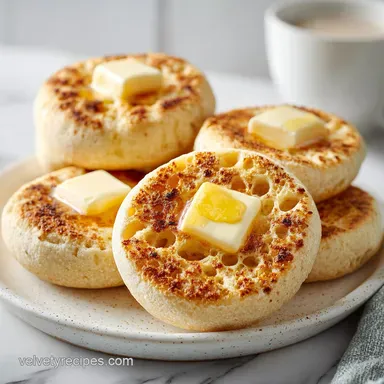
Homemade English Muffins: Fluffy and Golden

- Time: 30 min active + 1 hour 40 mins rising = Total 2 hours 25 mins
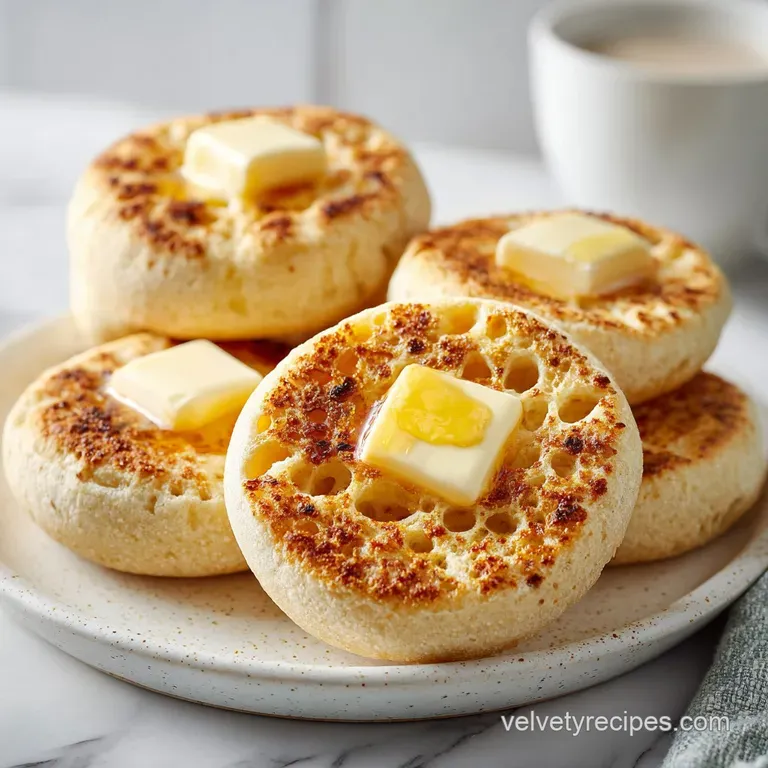
- Flavor/Texture Hook: Deep mahogany gold crust with a velvety, fluffy interior
- Perfect for: Slow weekend breakfasts or meal prep for the work week
That first hiss when the dough hits the hot cast iron is the sound of victory. For the longest time, I wondered why the muffins I bought at the store always felt like dense sponges, while the ones at the fancy brunch spots had these incredible, airy pockets.
I thought it was some secret industrial machine, but it turns out it's just about how you handle the heat.
Right then, let's get into it. If you've ever struggled with bread that comes out too heavy or crusts that are too hard, this is for you. We're going for a buttery, biscuit like richness that makes every bite feel special.
This homemade english muffin recipe is all about keeping things simple but being precise with the temperature.
You can expect a dough that's slightly tacky but easy to work with, and a final product that's sturdy enough for a breakfast sandwich but light enough to eat plain. Trust me on this, once you taste the difference between a baked muffin and a griddled one, you'll never go back to the oven.
Homemade English Muffin Recipe
The secret to getting those "nooks and crannies" isn't a magic ingredient, it's the process. Most people try to bake these in the oven, but that just creates a standard dinner roll.
By cooking them on a stovetop, we create a over high heat sear on the bottom and top, which traps the steam inside and forces the dough to expand upward and outward, creating those gorgeous gaps.
If you're new to yeast, don't let it scare you. According to the guides at King Arthur Baking, the key is simply making sure your water isn't too hot, or you'll kill the yeast. We're looking for a gentle warmth, like a baby's bath. Once that yeast starts foaming, you know the magic is happening.
The Logic of the Rise
- Steam Pockets: Griddling instead of baking creates rapid internal steam, which pushes the dough apart to form holes.
- Cornmeal Barrier: The cornmeal prevents sticking and adds a slight crunch to the bottom.
- Slow Heat: Medium low heat ensures the center cooks through before the outside burns.
- Tacky Dough: Keeping the dough slightly sticky ensures the final muffin stays velvety and doesn't turn into a rock.
Between the classic method and a "quick" version, there's a big difference in the final bite. I've tried the fast versions, and while they're okay for a Tuesday morning, they don't have the soul of a slow risen dough.
| Feature | Fast Method (Baking Powder) | Classic Method (Yeast) |
|---|---|---|
| Texture | Cake like/Dense | Fluffy with holes |
| Flavor | Neutral/Bready | Rich/Buttery |
| Effort | Very Low | Moderate |
| Best For | Emergencies | Weekend Brunch |
Ingredient Deep Dive
Understanding what each part does helps you adjust things on the fly. In this homemade english muffin recipe, the butter is the star for flavor, but the honey is the secret weapon for the crust.
| Ingredient | Science Role | Pro Secret |
|---|---|---|
| Honey | Food for yeast + browning | Use a dark honey for a deeper color |
| Melted Butter | Softens gluten | Adds that bakery quality richness |
| Cornmeal | Thermal barrier | Use fine grain for a subtler crunch |
| All Purpose Flour | Structure | Measure by spooning into cup, don't scoop |
Recipe Specs
For this recipe, you'll need basic pantry staples. I've found that using high-quality unsalted butter makes a massive difference in the final taste.
- 1 cup warm water Why this? Activates yeast without killing it
- 2 1/4 tsp active dry yeast Why this? Provides the lift and airy texture
- 1 tbsp honey Why this? Helps the crust brown beautifully
- 2 tbsp unsalted butter, melted Why this? Keeps the crumb velvety
- 1 tsp salt Why this? Balances the sweetness of honey
- 3 cups all purpose flour Why this? Standard protein level for soft bread
- 1/2 cup cornmeal Why this? Prevents sticking and adds texture
Easy Ingredient Swaps
| Original Ingredient | Substitute | Why It Works |
|---|---|---|
| Honey (1 tbsp) | Maple Syrup (1 tbsp) | Similar sugar content. Note: Adds a hint of maple flavor |
| All Purpose Flour | Bread Flour (3 cups) | More protein. Note: Result is slightly chewier, less "biscuit like" |
| Warm Water | Warm Milk (1 cup) | Adds fat and protein. Note: Makes the crumb even softer and whiter |
If you're looking for more yeast based projects, you might love my Classic Onion Cake recipe for a savory twist on dough.
Tools for the Job
You don't need a fancy bakery setup for this. A few basic tools will get the job done perfectly.
- Cast iron skillet (the gold standard for heat retention)
- Large mixing bowl
- Rolling pin (or a smooth wine bottle)
- Circular cutter or a wide mouth glass
- Parchment paper
- Damp kitchen towel
Simple step-by-step Instructions
Right then, let's get cooking. Follow these steps closely, especially the temperature cues, to ensure your homemade english muffin recipe turns out perfectly.
- Combine warm water, honey, and yeast in a bowl. Let it sit for 5-10 minutes until it becomes frothy and smells like a brewery.
- Stir in the melted butter and salt, then gradually add the flour. Note: Add flour slowly so you don't end up with a dry clump.
- Mix until a shaggy dough forms, then knead for about 5 minutes until the dough is smooth and slightly tacky.
- Place the dough in a greased bowl, cover with a damp cloth, and let it rise in a warm spot for 1 hour until doubled in size.
- Gently punch down the dough and roll it out on a floured surface to a thickness of 3/4 inch.
- Using a circular cutter or a glass, stamp out 12 muffins.
- Place the rounds on a parchment lined tray dusted with cornmeal. Cover and let rise for another 30-40 minutes.
- Heat a cast iron skillet over medium low heat. Note: Do not add oil or butter to the pan; the cornmeal handles the sticking.
- Carefully transfer the muffins to the dry pan and cook for 5-7 minutes per side until they reach a deep mahogany gold color and sound hollow when tapped.
Fixing Common Muffin Mishaps
Even the best of us have a bad batch. Most issues with a homemade english muffin recipe come down to either the yeast or the pan temperature.
Why Your Muffins Stay Flat
If your muffins didn't rise, your yeast might be dead or the room was too cold. Make sure the water is warm (not hot) and give the dough plenty of time to double in size.
Why the Outside Burnts Fast
This usually means your skillet is too hot. Cast iron holds heat incredibly well, so "medium low" is your friend. If the outside is dark but the middle is raw, drop the heat and give them more time.
Dealing with Sticky Dough
If the dough is sticking to everything, you might have had a very humid day. Add flour one tablespoon at a time until you can handle it, but don't over flour, or you'll lose that velvety texture.
| Problem | Root Cause | Solution |
|---|---|---|
| Dense interior | Under proofed dough | Let rise for the full hour; don't rush it |
| Burnt bottom | Heat too high | Lower to med low and use a thicker pan |
| No "nooks" | Over kneaded dough | Knead only until smooth, don't overwork |
Precision Checkpoints:
- Water Temp: 105-115°F (40-46°C)
- Dough Thickness: Exactly 3/4 inch
- Pan Temp: Medium low (approx. 325°F/160°C)
Common Mistakes Checklist:
- ✓ Did you wait for the yeast to foam?
- ✓ Is the pan dry (no oil)?
- ✓ Did you use cornmeal on the tray?
- ✓ Did you tap the muffin to hear that "hollow" sound?
- ✓ Did you roll the dough to 3/4 inch?
Adjusting the Batch Size
Sometimes you only need a few, or you're feeding a crowd. Here is how to tweak this homemade english muffin recipe.
Scaling Down (Half Batch) Use 1/2 cup water, 1 1/8 tsp yeast, 1/2 tbsp honey, and 1 tbsp butter. Use a smaller skillet so the pan doesn't lose heat. Reduce the first rise time by about 10 minutes.
Scaling Up (Double Batch) Double everything except the salt and honey, keep those at 1.5x to avoid over seasoning or too much browning. Work in two batches on the skillet; crowding the pan will drop the temperature and you'll lose the sear.
Decision Shortcut:
- If you want a softer bite → Use warm milk instead of water.
- If you want a crustier bottom → Increase cornmeal dusting.
- If you're in a rush → Use a microwave safe spot (off) for the first rise.
Truths About English Muffins
There are a few things people tell you about bread that just aren't true. Let's clear those up.
The idea that you need a professional steam oven to get "nooks and crannies" is a myth. As mentioned on Serious Eats, the griddle method creates its own internal steam, which is actually more effective for this specific bread.
Another myth is that you should use a lot of oil in the pan. In reality, oil can actually interfere with the cornmeal's ability to create that distinct, toasted crust. A dry, hot cast iron skillet is all you need.
Keeping Muffins Fresh
Since this homemade english muffin recipe doesn't have preservatives, they don't last as long as the store-bought ones.
Storage Guidelines Keep them in an airtight container or a zip top bag at room temperature for up to 3 days. If you won't eat them by then, pop them in the fridge for 5 days.
Freezing for Later These freeze beautifully. Wrap them individually in plastic wrap and toss them in a freezer bag for up to 3 months. To reheat, just pop a frozen muffin directly into the toaster, no need to thaw.
Zero Waste Tips If you have a few muffins that went hard, don't toss them. Slice them thin, brush with garlic butter, and toast them in the oven to make homemade garlic crostini. Any leftover cornmeal can be used to coat the bottom of a pizza stone or used for breading fried fish.
Serving and Pairing Ideas
The best way to eat these is split with a fork, not sliced with a knife. This keeps all those precious holes open for your toppings.
The Classic Breakfast Slather a toasted muffin with salted butter and a drizzle of honey or raspberry jam. It's simple and lets the buttery flavor of the dough shine.
The Savory Egg Sandwich Toast the muffin, add a fried egg, a slice of sharp cheddar, and some avocado. This is the perfect companion to a light lunch, perhaps paired with some Chicken Piccata for a full course meal.
Creative Toppings Try a spread of ricotta cheese and sliced peaches for a summer vibe, or go bold with smashed avocado and a pinch of red pepper flakes. Because the muffins are so sturdy, they can handle heavy toppings without falling apart.
Recipe FAQs
What gives English muffins their distinctive flavor?
The combination of honey, melted butter, and a mahogany-gold sear. Cooking them on a griddle instead of in an oven creates a toasted, buttery crust that contrasts with the soft, airy center.
How to make home made English muffins?
Combine warm water, honey, and yeast, then let it sit for 5-10 minutes. Stir in butter and salt, mix in flour, knead for 5 minutes, let rise for 1 hour, roll to 3/4 inch, cut into rounds, let rise for 30-40 minutes, and cook in a cast iron skillet for 5-7 minutes per side.
Can diabetics have muffins?
No, not without professional guidance. These contain honey and all-purpose flour, which can cause significant spikes in blood glucose levels.
What kind of dough is used for English muffins?
A simple yeast-leavened dough. It uses all-purpose flour and honey for a slightly sweet profile, resulting in a texture that is smooth and slightly tacky before the first rise.
Is it true that English muffins must be baked in the oven?
No, this is a common misconception. Griddling them in a cast iron skillet over medium-low heat traps steam inside the dough, which is what creates the signature nooks and crannies.
Why is cornmeal used on the tray?
To prevent the dough from sticking to the surface. If you enjoyed using cornmeal for texture here, the same principle adds a great crunch to our honey butter cornbread.
How do I know when the muffins are fully cooked?
Wait until they reach a deep mahogany-gold color and sound hollow when tapped. This typically occurs after 5-7 minutes of cooking per side in a medium-low heat pan.
Homemade English Muffin Recipe in 45 Min