Tomato Basil Quiche: Silky Custard
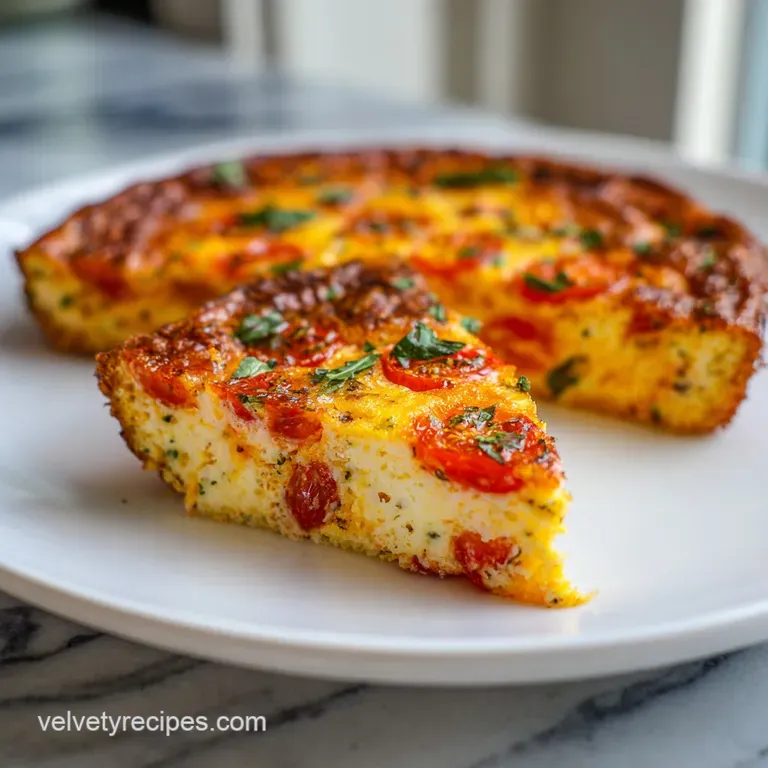
- Time: Active 15 minutes, Passive 35 minutes, Total 50 minutes
- Flavor/Texture Hook: Silky egg custard with a salty Parmesan crust
- Perfect for: Weekend brunch or a low carb weeknight dinner
- The Best Way To Make Tomato Basil Quiche
- Why This Simple Recipe Actually Works
- Essential Stats and Timing Specs
- Gathering Your Quality Ingredients and Substitutes
- Basic Tools for Stress Free Cooking
- Simple Steps for a Perfect Bake
- Fixing Common Texture and Flavor Mistakes
- Creative Variations for Your Egg Dish
- Scaling the Recipe Up or Down
- Debunking Kitchen Legends
- Storing and Reheating Your Leftover Quiche
- Beautiful Ways to Serve Your Quiche
- Recipe FAQs
- 📝 Recipe Card
The Best Way To Make Tomato Basil Quiche
Imagine walking into your kitchen on a Sunday morning to the smell of fresh basil and tomatoes sizzling in a touch of olive oil. There is something truly grounding about the sound of eggs whisking against a glass bowl, a rhythmic clicking that promises a hearty meal is on the way.
I remember the first time I tried a crustless version of this dish; I was honestly skeptical because I love a buttery crust, but the way the cheese forms its own golden edge changed my mind forever. It is lighter, faster, and lets the actual ingredients shine without getting lost in a heavy dough.
We have all been there where a quiche turns into a soggy, weeping mess on the plate. It is frustrating when you spend money on fresh produce only for it to release all its liquid into the eggs. That is exactly why I started roasting my tomatoes first.
This simple shift in technique makes the final result look like a million dollars. You get these concentrated bursts of summer flavor tucked into a velvety egg base that holds its shape beautifully when sliced.
In this guide, we are going to walk through how to balance the moisture and fat to get that restaurant quality set every single time. Whether you are hosting friends or just trying to use up that bunch of basil before it wilts, this method is reliable and straightforward.
We'll skip the fussy steps and focus on what actually makes the food taste better. Trust me, once you see how that Parmesan creates a lacy, crispy rim around the edges, you won't go back to the boxed crusts.
Why This Simple Recipe Actually Works
Most people think eggs are simple, but they are actually tiny miracles of chemistry. When we talk about a Tomato Basil Quiche, the challenge is keeping the fats and liquids in a stable dance so they don't separate during the bake.
- Fat Stabilization: The heavy cream provides enough fat to coat the egg proteins, which prevents them from bonding too tightly and squeezing out water.
- Amino Acid Interaction: Salt doesn't just add flavor; it begins to break down egg proteins slightly before cooking, resulting in a more tender, less rubbery curd.
- Maillard Reaction: Using a mix of Parmesan and mozzarella creates a two fold effect: the mozzarella provides the pull, while the Parmesan undergoes a browning process that creates a savory crust.
- Moisture Control: Slicing the 1.5 cups cherry tomatoes and giving them a head start in the heat ensures the internal structure of the quiche remains firm rather than spongy.
Similar to the logic behind a hearty Million Dollar Lasagna recipe, we are layering flavors and textures to ensure every bite feels substantial. The garlic powder and cracked black pepper act as bridge seasonings, linking the sweetness of the tomatoes to the sharp tang of the Parmesan.
| Cooking Method | Time | Texture Result | Best For |
|---|---|---|---|
| Traditional Oven | 35 minutes | Even set, golden top | Maximum flavor and best "slice ability" |
| Stovetop Start | 42 minutes | Crispy bottom, soft top | Achieving a frittata style crusty base |
| Toaster Oven | 30 minutes | Fast browning | Small batches or quick solo lunches |
The oven method remains the gold standard here because the ambient heat surrounds the dish, allowing the 6 large eggs to cook through without the bottom burning before the top is set.
Essential Stats and Timing Specs
When you are a busy home cook, timing is everything. You don't want to be hovering over the stove when you could be enjoying your coffee. This dish is designed to be efficient. The prep is mostly just halving the tomatoes and chiffonading the basil.
If you find yourself with extra greens, you might even consider trying a Spinach Mushroom Crustless Quiche recipe next time to switch things up. For now, we are sticking to these precise metrics to ensure your first batch is a total success.
| Component | Science Role | Pro Secret |
|---|---|---|
| Heavy Cream | Emulsifier & Fat | Use room temperature cream to prevent the eggs from curdling when mixed. |
| Low Moisture Mozzarella | Structural Binder | This specific cheese has less water, meaning your quiche won't "weep" liquid as it cools. |
| Fresh Basil | Volatile Aromatics | Add half into the mix and half on top after baking to preserve the bright green color. |
| Sea Salt | Protein Denaturant | Sea salt dissolves more slowly than table salt, giving a more nuanced seasoning profile. |
Gathering Your Quality Ingredients and Substitutes
To make a Tomato Basil Quiche that actually tastes like a million dollars, the quality of your dairy and produce matters. We are using 6 large eggs as our base, which provides the protein structure.
The 1 cup heavy cream is non negotiable if you want that silky mouthfeel; using milk often results in a watery mess that feels more like a scrambled egg pie.
- 6 Large Eggs: The foundation. Why this? Provides the structural protein and leavening for a light, airy rise.
- Substitute: 1.5 cups of liquid egg whites (though the texture will be much leaner).
- 1 cup heavy cream: Adds richness. Why this? Fat prevents egg proteins from over coagulating into a rubbery texture.
- Substitute: Whole milk with 2 tbsp melted butter added.
- 1.5 cups cherry tomatoes: Bursting sweetness. Why this? They hold their shape better than large sliced tomatoes during baking.
- Substitute: Sun dried tomatoes (use only 0.5 cup as they are very concentrated).
- 1 cup shredded low moisture mozzarella: For the cheese pull. Why this? Melts evenly without releasing excess water into the custard.
- Substitute: Mild provolone or Monterey Jack.
- 0.5 cup freshly grated Parmesan cheese: For the salty crust. Why this? High salt and low moisture create that signature crispy exterior.
- Substitute: Pecorino Romano for a sharper, saltier punch.
- 0.5 cup fresh basil leaves: The aromatic heart. Why this? Basil and tomato are a classic pairing that provides herbal freshness.
- Substitute: 1 tbsp dried basil (though the flavor will be more "muted" and earthy).
Basic Tools for Stress Free Cooking
You don't need a professional kitchen to pull this off. In fact, a minimalist approach usually works best for egg dishes. A simple 9 inch pie dish or a cast iron skillet works wonders. I prefer glass or ceramic because you can see the edges browning, which is your best cue for doneness.
Chef Tip: If you use a cast iron skillet, preheat it in the oven for 5 minutes before adding the oil and the ingredients. This creates an immediate "sear" on the bottom that mimics a crust.
You'll also want a balloon whisk. Don't just use a fork; you want to incorporate a bit of air into those eggs. That air expands in the heat, giving the quiche its lift. A sharp knife is also key for the basil.
If your knife is dull, you'll bruise the leaves (turning them black) rather than slicing them cleanly into those beautiful ribbons we call a chiffonade.
Simple Steps for a Perfect Bake
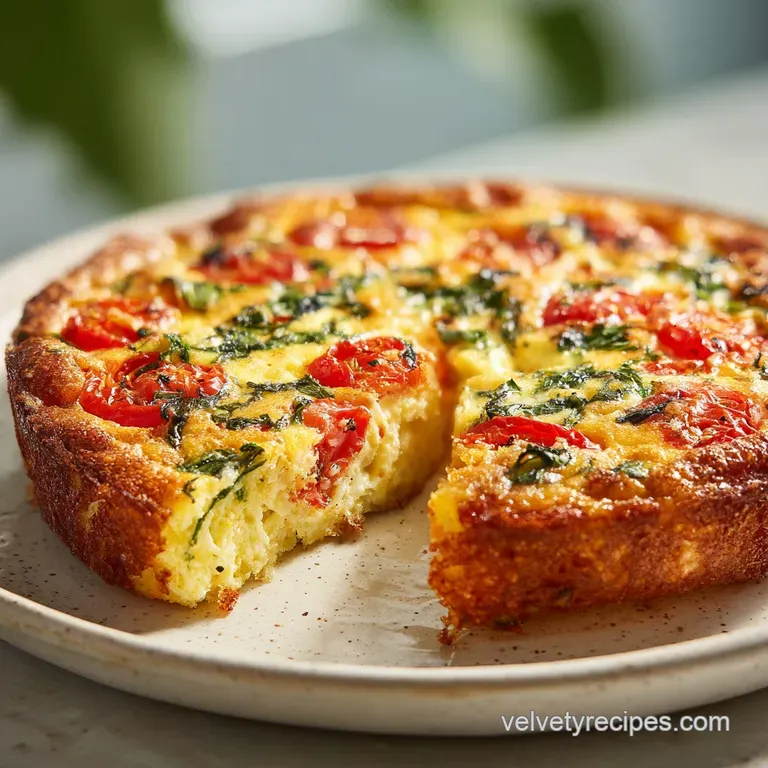
- Preheat the oven. Set your temperature to 375°F (190°C). Note: A hot oven is crucial for that initial rise.
- Prep the tomatoes. Toss the 1.5 cups cherry tomatoes with 1 tbsp extra virgin olive oil and a pinch of salt.
- Concentrate the flavor. Roast the tomatoes on a small tray for 10 minutes until the skins just begin to burst.
- Whisk the custard. Combine 6 large eggs, 1 cup heavy cream, 0.25 tsp garlic powder, 0.5 tsp sea salt, and 0.25 tsp cracked black pepper. Note: Whisk until no streaks of yolk remain.
- Prepare the dish. Grease your 9 inch baking dish thoroughly with butter or oil to prevent sticking.
- Layer the base. Spread the 1 cup shredded mozzarella and half of the 0.5 cup Parmesan across the bottom.
- Add the aromatics. Scatter the roasted tomatoes and half of the 0.5 cup fresh basil over the cheese.
- Pour the eggs. Gently pour the egg mixture over the fillings until the liquid reaches just below the rim.
- Finish with cheese. Sprinkle the remaining Parmesan on top to create a savory crust.
- Bake to perfection. Slide into the oven for 25 to 30 minutes until the center has a slight jiggle and the edges are golden brown.
Fixing Common Texture and Flavor Mistakes
One of the biggest hurdles with any egg heavy dish is the dreaded "weeping." This happens when the eggs overcook and the protein network collapses, pushing out the liquid. If you see a pool of water at the bottom of your dish, you likely left it in the oven five minutes too long.
Why Your Basil Turned Black
Basil is incredibly sensitive to heat and oxidation. If you chop it too early or cook it too long at a high temperature, those delicate oils oxidize. To prevent this, always use a very sharp knife and try to fold most of it into the custard so the eggs protect it from the direct heat of the oven.
| Problem | Root Cause | Solution |
|---|---|---|
| Quiche is watery | Too much moisture from tomatoes | Roast tomatoes first or use sun dried versions to reduce water content. |
| Rubbery texture | Overcooked eggs | Remove from oven when the center still has a slight "jiggle" like gelatin. |
| Sticking to pan | Improper greasing | Use a generous amount of butter and a sprinkle of Parmesan on the pan surface. |
Common Mistakes Checklist
- ✓ Never use "fat free" half and half; the lack of fat will cause the eggs to curdle.
- ✓ Always halven your cherry tomatoes; whole ones can "explode" and create large steam pockets.
- ✓ Don't skip the resting time! Let the quiche sit for 10 minutes after baking so the structure sets.
- ✓ Avoid using pre shredded Parmesan in the green can; it contains cellulose that prevents a clean melt.
Creative Variations for Your Egg Dish
If you find yourself making this every weekend, you might want to play with the flavor profile. I often look at my Spinach Cottage Cheese recipe for inspiration on how to add extra protein. Adding a dollop of ricotta or cottage cheese can make the interior even creamier, though it will require an extra 5 minutes of bake time.
If you are looking for a bit of a kick, try adding a pinch of red pepper flakes to the egg mix. It cuts through the richness of the heavy cream and mozzarella perfectly. For a "Pizza" style quiche, you can even add a few slices of pepperoni or some cooked Italian sausage.
Just make sure any meat you add is fully cooked and drained of grease before it hits the egg mixture.
Scaling the Recipe Up or Down
Feeding a crowd or just cooking for one? This recipe is incredibly forgiving when it's time to adjust the volume.
Scaling Down (for a small 6 inch dish): Use 3 eggs and 0.5 cup of cream. You'll want to reduce the baking time by about 8 to 10 minutes. Because the dish is shallower, keep a close eye on it starting at the 18 minute mark.
Scaling Up (for a large 9x13 casserole): Double the ingredients (12 eggs, 2 cups cream). However, do not double the salt and spices use 1.5x the amount to avoid over seasoning. You may need to increase the bake time to 45 minutes.
If the edges are browning too fast while the middle is wet, tent the dish with foil.
Debunking Kitchen Legends
Myth: You must use a crust to call it a quiche. Actually, the term "quiche" refers to the savory egg custard itself. While the French tradition usually involves a shortcrust pastry, the crustless version is a legitimate culinary variation that focuses on the texture of the custard.
Removing the crust actually makes the dish more versatile for different dietary needs.
Myth: Adding more eggs makes it firmer. It's actually the opposite! Adding more eggs without increasing the fat (cream) can make the dish tough and rubbery. The ratio of 6 eggs to 1 cup of cream is the sweet spot for a velvety texture that still holds its shape.
If you want it firmer, you'd actually want to use more yolks and fewer whites, as the whites contain the most water.
Storing and Reheating Your Leftover Quiche
This Tomato Basil Quiche is actually one of those rare dishes that tastes just as good, if not better, the next day. The flavors have time to meld, and the structure becomes even firmer.
- Fridge: Store in an airtight container for up to 4 days. Keep a paper towel in the container to absorb any condensation.
- Freezer: You can freeze slices for up to 2 months. Wrap them individually in plastic wrap and then foil. To eat, thaw in the fridge overnight.
- Reheating: Avoid the microwave if you can; it makes the eggs "bouncy." Instead, pop a slice in the oven or air fryer at 325°F (160°C) for 10 minutes.
- Zero Waste Tip: Don't throw away those basil stems! While they are too tough for the quiche, you can toss them into a freezer bag for your next batch of vegetable stock. They add a lovely, subtle sweetness.
Beautiful Ways to Serve Your Quiche
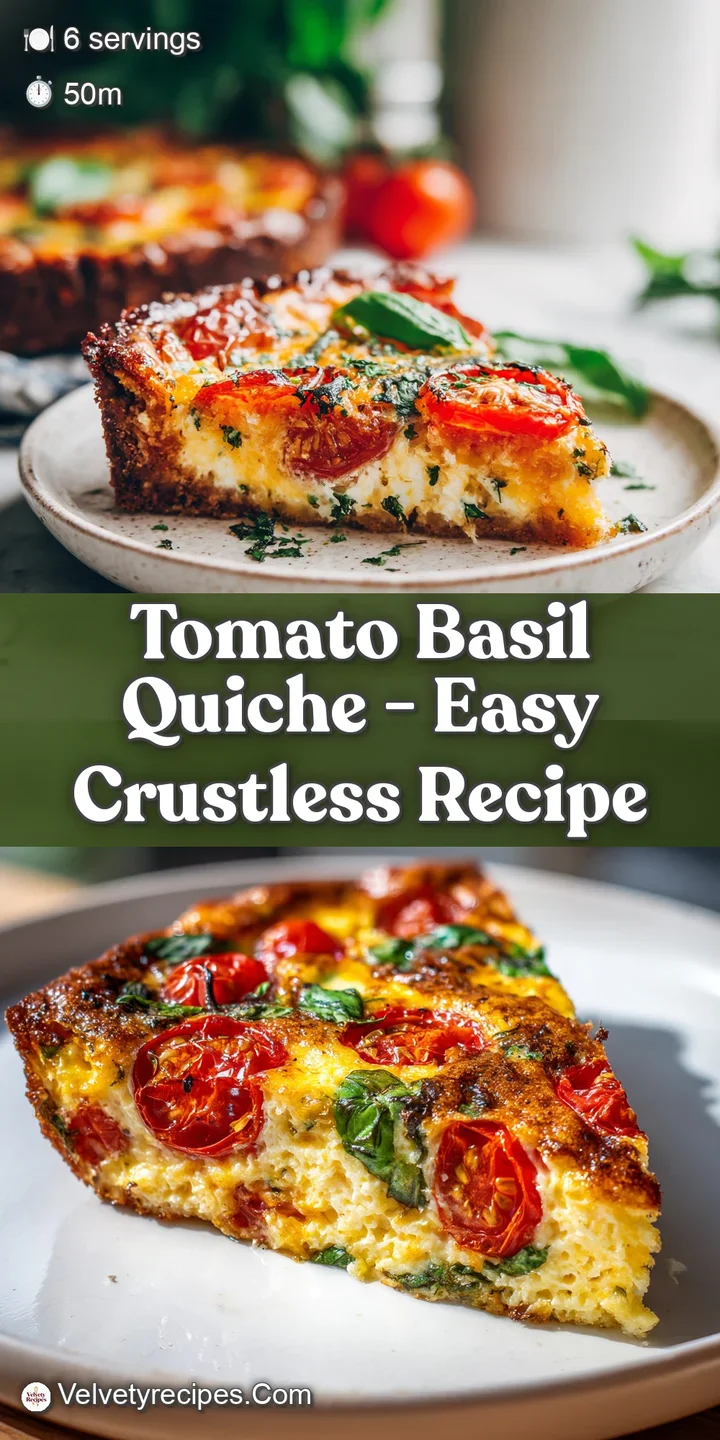
To give this a "Gourmet" look, it's all about the final touches. Don't just serve it plain. Save a handful of that fresh basil chiffonade and sprinkle it on just before the plate hits the table. The contrast of the bright green against the red tomatoes and golden cheese is stunning.
A simple side salad of arugula tossed in lemon juice and olive oil provides a sharp, peppery contrast to the rich quiche. If you want a more substantial meal, serve it with a side of crispy smashed potatoes or even a slice of thick sourdough toast.
If you are serving this for a fancy brunch, a drizzle of balsamic glaze over the top right before serving adds a sweet acidity that makes the whole dish pop. It really is the little things that make a home cooked meal feel like a restaurant experience.
Recipe FAQs
Is roasting the tomatoes really necessary for a good Tomato Basil Quiche?
Yes, roasting concentrates the flavor. Roasting briefly removes excess moisture from the tomatoes, which prevents the egg custard from becoming watery or separating during the bake.
How to prevent the quiche custard from turning rubbery?
Use heavy cream instead of milk. The higher fat content in heavy cream coats the egg proteins, ensuring they bind gently and result in a tender, silky texture rather than a tough curd.
How to achieve the crispy Parmesan crust mentioned in the recipe?
Sprinkle fresh Parmesan over the top layer of filling before baking. The cheese's low moisture and high salt content browns quickly at high heat, forming a lacy, savory edge around the set custard.
Is it true that using pre-shredded mozzarella is acceptable here?
No, freshly shredded low-moisture mozzarella is highly recommended. Pre-shredded cheeses contain anti caking agents that inhibit a smooth, even melt and can contribute to a slightly grainy texture in the quiche.
How long should I whisk the eggs and cream mixture?
Whisk until the mixture is pale yellow and homogenous. You want to incorporate a little air for lift, but stop before it gets overly frothy, usually about 60 to 90 seconds with a balloon whisk.
When is the best time to add the fresh basil leaves?
Add half before baking and half after cooling. Incorporating some early provides background flavor, but reserving fresh basil to sprinkle on top preserves its bright green color and intense aroma.
How do I know when the crustless quiche is fully baked and set?
Remove it from the oven when the edges are firm but the center still shows a slight jiggle. The residual heat will continue to cook the center to perfection as it rests outside the oven for 10 minutes.
Tomato Basil Quiche
Ingredients:
Instructions:
Nutrition Facts:
| Calories | 324 kcal |
|---|---|
| Protein | 14.9 g |
| Fat | 27.7 g |
| Carbs | 3.7 g |
| Fiber | 0.5 g |
| Sugar | 1.8 g |
| Sodium | 467 mg |
