Traditional Onion Cake with Smoky Filling
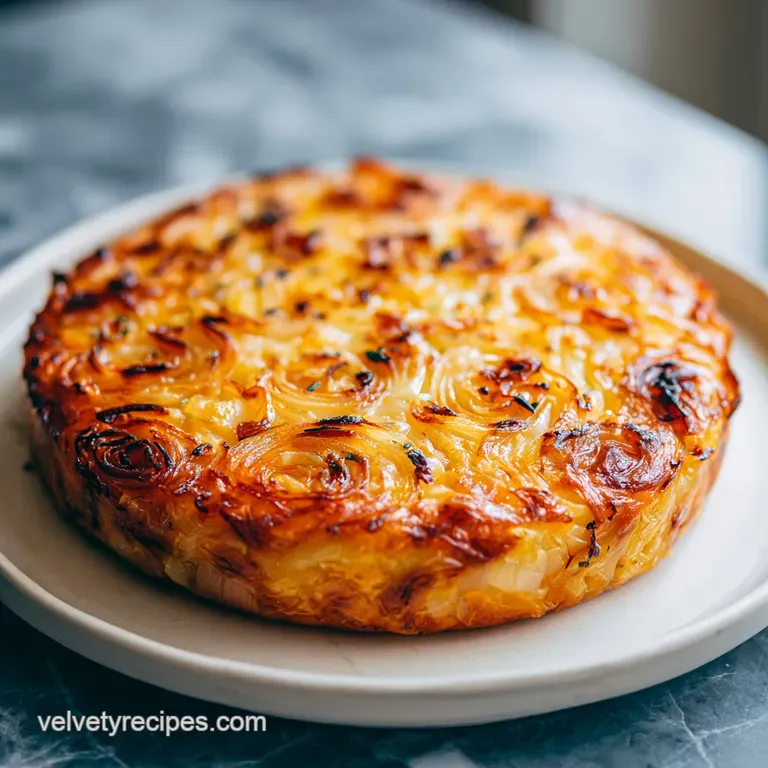
- Time: Active 30 minutes, Passive 45 minutes, Total 1 hour 15 mins
- Flavor/Texture Hook: Velvety caramelized onions with a smoky bacon crunch
- Perfect for: Fall gatherings, potlucks, or a cozy weekend lunch
- The Hearty Magic of a Real Onion Cake
- What Makes This Recipe Work So Well
- Component Analysis and Ingredient Roles
- Gathering the Essential Ingredients for Success
- The Essential Tools for a Flawless Bake
- The Step-by-Step Path to Golden Perfection
- Solving Common Baking and Flavor Hurdles
- Creative Ways to Adapt the Flavor Profile
- The Truth About Preparation Techniques
- Preserving Freshness and Reducing Kitchen Waste
- Perfect Pairings for a Complete Hearty Meal
- Recipe FAQs
- 📝 Recipe Card
The Hearty Magic of a Real Onion Cake
Have you ever walked into a kitchen and felt like the aroma alone was giving you a warm hug? That is exactly what happens the second 1.2kg of yellow onions start hitting the butter in your skillet.
I remember the first time I tried making this; I looked at that massive pile of sliced onions and thought there was no way they’d all fit. But as they sizzle and soften, they transform into this sweet, golden jam that smells like a million dollars.
It's a scent that lingers in the best way possible, promising something deeply satisfying.
We are talking about a dish that feels like it has a soul. This isn't a quick toss salad or a light snack; it’s a substantial, rustic masterpiece that has been a staple in German and Amish kitchens for generations.
If you’ve ever felt intimidated by yeast dough, this is the place to start because it’s incredibly forgiving. We aren't looking for a structural marvel here; we want a soft, pillowy base that can support a heavy, rich topping of sour cream, eggs, and smoky bacon.
The beauty of this recipe lies in the contrast. You get the slight shatter of the bacon bits against the velvety custard, all resting on a crust that’s soaked up just enough of those onion juices to stay tender.
It’s the kind of meal that makes people hang out in the kitchen just to be near the oven while it bakes. Trust me, once you pull this golden brown beauty out of the heat, you'll realize why people have been obsessed with this "cake" for centuries. It’s honest, hearty food at its absolute finest.
What Makes This Recipe Work So Well
The Maillard Reaction: Slow cooking 1.2kg of onions breaks down complex sugars into simple ones, creating a deep sweetness that balances the salty bacon. This process turns a sharp, pungent vegetable into a mellow, savory base that defines the dish.
Protein Networking: Using 375g of all purpose flour provides just enough gluten to give the crust structure without making it tough or bread like. It stays supple enough to absorb the custard's moisture while remaining sturdy enough to hold a slice.
Fat Induced Tenderness: The 60g of softened butter in the dough coats the flour particles, inhibiting excessive gluten development. This results in a "short" crumb that feels more like a savory pastry than a standard pizza dough.
The Custard Emulsion: Mixing 200g of sour cream with 3 large eggs creates a stable fat in-water emulsion. During the bake, the egg proteins coagulate, trapping the sour cream's moisture and preventing the onion juices from making the crust soggy.
The Digestive Catalyst: Caraway seeds aren't just for that distinct earthy flavor; they contain essential oils that help the body process the sulfur compounds in the large volume of onions. It’s a bit of ancient kitchen wisdom that actually has a scientific backing for comfort.
| Thickness of Dough | Internal Temp | Rest Time | Visual Cue |
|---|---|---|---|
| 1.5 cm | 180°C (Oven) | 10 minutes | Edges turn golden brown |
| 2.0 cm | 180°C (Oven) | 15 minutes | Center is set, not jiggly |
| 2.5 cm | 180°C (Oven) | 20 minutes | Deep mahogany bacon bits |
This chart helps you decide how thick you want your base. If you like a crispier bottom, roll the 375g of dough thinner across a larger tray. If you prefer a bready, focaccia style experience, keep it thicker in a smaller pan.
Just remember that a thicker crust needs that extra rest time to ensure the custard in the middle fully sets without the bottom burning.
Component Analysis and Ingredient Roles
| Ingredient | Science Role | Pro Secret |
|---|---|---|
| 1.2kg Yellow Onions | Bulk and Moisture | Slice them against the grain for a texture that melts faster into the custard. |
| 150g Diced Bacon | Fat and Umami | Start the bacon in a cold pan to render out maximum fat for sautéing the onions. |
| 7g Active Dry Yeast | Leavening Agent | Ensure your 180ml of milk is exactly 110°F; too hot kills the yeast, too cold delays the rise. |
| 200g Sour Cream | Moisture and Tang | Use full fat sour cream only the fat content is what prevents the custard from curdling. |
Selecting the right onions is paramount for a successful bake. While red onions look pretty, they can turn a strange muddy color when baked under a custard. Standard yellow onions have the highest sugar content, which is vital for that caramelized finish. If you want a slightly more refined version, you can check out my Caramelized Specialty Dish recipe to see how I handle large batches of alliums for different textures.
Gathering the Essential Ingredients for Success
- 375g All purpose flour: This provides the structural foundation. Why this? AP flour has a moderate protein content for a soft yet sturdy crust.
- Substitute: Type 00 flour for a silkier, more elastic dough.
- 180ml Whole milk: Warmed to 110°F to wake up the yeast. Why this? The fat in whole milk creates a richer, more tender crumb.
- Substitute: 2% milk works, but the crust will be slightly less indulgent.
- 7g Active dry yeast: Our rising star. Why this? It provides a reliable, steady rise for a fluffy base.
- Substitute: 5g Instant yeast (skip the blooming step).
- 60g Unsalted butter: Softened to room temp for the dough. Why this? Butter adds flavor and prevents the crust from becoming "bready."
- Substitute: Lard for an ultra traditional, flaky Old World texture.
- 1.2kg Yellow onions: Thinly sliced. Why this? This high volume creates the signature thick, jammy topping.
- Substitute: Sweet Vidalia onions for an even more sugary profile.
- 150g Bacon: Finely diced. Why this? Provides the smoky saltiness that cuts through the rich cream.
- Substitute: Smoked tofu or mushrooms with a drop of liquid smoke for vegetarians.
- 200g Sour cream: The base of our custard. Why this? The acidity brightens the heavy flavors of onion and bacon.
- Substitute: Crème fraîche for a more luxurious, less tangy finish.
- 3 Large eggs: Binding everything together. Why this? Eggs provide the structure that turns cream into a sliceable custard.
- Substitute: There is no great sub for the eggs in this specific custard texture.
- 1 tsp Caraway seeds: The secret aromatic. Why this? Classic pairing that aids digestion and adds earthy depth.
- Substitute: Fennel seeds if you prefer a slight licorice note.
The Essential Tools for a Flawless Bake
To get that perfect golden crust, a heavy rimmed baking sheet or a large 30cm cast iron skillet is your best friend. The cast iron, in particular, holds heat exceptionally well, ensuring the bottom of the Onion Cake gets that beautiful sizzle while the top remains velvety.
You’ll also want a sharp mandoline slicer for those 1.2kg of onions trust me, your wrists will thank you. If you don't have a mandoline, just take your time with a well sharpened chef's knife; the key is uniform thickness so they cook at the same rate.
A sturdy stand mixer makes light work of the dough, but don't feel like you need one. I often mix this by hand in a large bowl just to feel the texture of the dough changing as the butter incorporates. You’ll also need a large, wide bottomed skillet for the onions.
A wider pan allows moisture to evaporate faster, which means you spend less time standing over the stove and more time anticipating that first bite.
The step-by-step Path to Golden Perfection
- Bloom the yeast. Combine the 180ml of warm milk with 5g of sugar and 7g of yeast. Wait 10 minutes until it becomes foamy and fragrant.Note: If it doesn't foam, your yeast is likely dead; start over with fresh yeast.
- Mix the dough. Stir the 375g of flour and 5g of salt into the yeast mixture, then add the 60g of softened butter. Knead for 8 minutes until smooth and elastic.
- First proof. Place the dough in a greased bowl, cover with a damp cloth, and let it rise in a warm spot for 1 hour. Wait until it has doubled in size.
- Render the bacon. Add the 150g of diced bacon to a cold skillet and turn the heat to medium. Cook until the bacon is crispy and the fat is released.
- Sauté the onions. Add the 30g of butter and the 1.2kg of onions to the bacon fat. Cook for 20 minutes until translucent and golden.Note: Don't rush this; slow cooking removes the harsh "onion bite."
- Cool the mixture. Remove the skillet from the heat and let the onions cool for at least 15 minutes. Do this to prevent scrambling the eggs later.
- Prepare the custard. In a separate bowl, whisk together the 200g of sour cream, 3 eggs, caraway seeds, nutmeg, and pepper. Whisk until the mixture is completely smooth.
- Combine toppings. Fold the cooled onion and bacon mixture into the sour cream custard. Stir gently until every onion sliver is coated.
- Shape and fill. Punch down the dough and roll it out to fit your greased baking pan. Pour the onion mixture over the dough, spreading it to the edges.
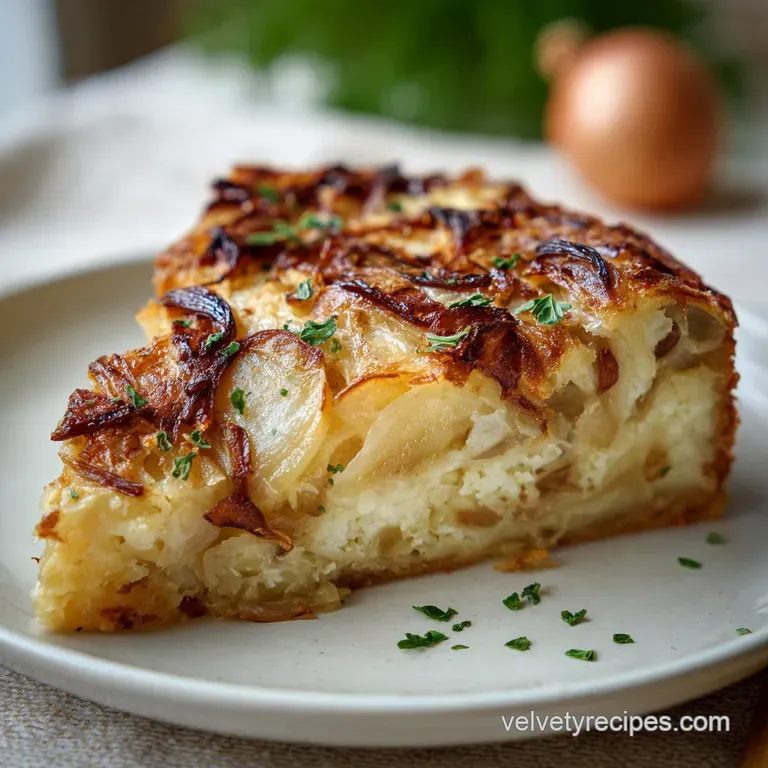
- Final bake. Place in a preheated oven at 180°C (350°F). Bake for 45 minutes until the center is set and the top is bronzed.
Solving Common Baking and Flavor Hurdles
Preventing the Soggy Bottom
One of the biggest frustrations with savory cakes is a base that feels damp or undercooked. This usually happens if the onions are still steaming when you put them on the dough, or if they haven't been cooked down enough to release their water content.
Always ensure your onions are jammy, not watery, before they meet the custard.
Another trick is to bake the cake on the lowest rack of your oven for the first 15 minutes. This gives the bottom a "head start" on the heat, setting the crust before the moisture from the custard can migrate downward.
If you're still worried, a light dusting of breadcrumbs on the dough before adding the filling acts as a moisture barrier.
| Problem | Root Cause | Solution |
|---|---|---|
| Filling is runny | Eggs didn't coagulate | Bake for an extra 5-10 mins or add 1 extra egg next time. |
| Crust is too tough | Over kneaded dough | Only knead until smooth; don't fight the dough. |
| Onions taste bitter | Heat was too high | Sauté onions on low medium; bitterness comes from burning. |
Common Mistakes Checklist
- ✓ Never add hot onions directly to the egg mixture (it will scramble the eggs).
- ✓ Don't skip the caraway seeds; they are the flavor bridge between bacon and onion.
- ✓ Ensure the milk isn't boiling; 110°F feels like warm bath water, not a hot tea.
- ✓ Pat the bacon dry if it seems excessively greasy after frying to keep the custard stable.
- ✓ Let the cake rest for 10 minutes after baking; this allows the custard to firm up for clean slicing.
For more tips on handling tricky doughs, you might find my Honey Butter Cornbread recipe helpful, as it tackles similar moisture balance issues in a savory sweet context.
Creative Ways to Adapt the Flavor Profile
If you find yourself cooking for a smaller crowd, you can easily scale this down. For a half batch, use a smaller 20cm round cake tin. You'll want to beat one egg and use about half of it to keep the custard ratio correct.
On the flip side, if you're feeding a literal army at a party, double everything and use a full sized commercial sheet pan. When doubling, you don't actually need to double the caraway seeds 1.5 teaspoons is usually plenty to avoid overwhelming the other flavors.
Chef's Note: If you're out of bacon, smoked paprika is a fantastic way to keep that "campfire" flavor without the meat. Just add a teaspoon to the onions while they sauté.
If you are looking for something completely different but still in the "comfort bread" family, you could check out this Amish Peanut Butter recipe which uses a similar traditional mindset but for a sweet finish to your meal.
| Modification | Ingredient Change | Texture Impact |
|---|---|---|
| Extra Crispy | Add 50g Parmesan | Creates a salty, lace like crust on top. |
| Vegetarian | Swap bacon for smoked Gouda | Adds creaminess and a different smoky note. |
| Lighter Version | Use Greek Yogurt | Tangier flavor but slightly more prone to weeping. |
The Truth About Preparation Techniques
One of the most persistent myths is that you need to salt the onions immediately to "draw out water." While salting does draw out moisture, doing it too early can actually prevent the onions from browning properly; they end up boiling in their own juices instead of frying.
I prefer to salt them halfway through the sautéing process. This allows them to soften first, then the salt helps them break down into that desired velvety texture.
Another misconception is that the dough needs to be paper thin. In a classic German Zwiebelkuchen, the dough is often a bit thicker almost like a soft flatbread. This thickness is functional; it absorbs the flavorful fats from the bacon and onions, making the crust itself a highlight rather than just a vessel.
Don't stress about getting it perfectly even; the rustic, uneven edges are part of the charm.
Preserving Freshness and Reducing Kitchen Waste
This Onion Cake keeps beautifully in the fridge for up to 3 days. To reheat, avoid the microwave at all costs it will turn the crust into a rubbery mess. Instead, pop a slice into a 180°C oven for about 8 minutes.
This restores the slight crunch to the bacon and ensures the custard is warmed through without losing its structure.
If you have leftover onion scraps or peels from that 1.2kg pile, don't toss them! Toss those skins into a freezer bag. When the bag is full, boil them with some peppercorns and celery scraps to make a rich, dark vegetable stock. As for freezing the cake itself, it actually freezes surprisingly well.
Wrap individual slices tightly in foil and plastic wrap; they'll stay good for up to 2 months. Just thaw them in the fridge overnight before reheating in the oven.
Perfect Pairings for a Complete Hearty Meal
Because this dish is quite rich and savory, it screams for something bright and acidic to balance the palate. A crisp green salad with a sharp white wine vinaigrette is the classic choice. The acidity of the vinegar cuts right through the sour cream and bacon fat, making every bite of the cake feel like the first one.
If you're serving this in the autumn, a glass of "Federweißer" (young, partially fermented wine) is the traditional pairing in Germany. If that's hard to find, a dry Riesling or even a tart apple cider works wonders. The fruity notes of the cider play off the natural sweetness of the caramelized onions in a way that feels incredibly intentional. It’s the kind of meal that doesn't need much else maybe just a few good friends and a cold evening to truly appreciate the warmth it brings to the table. For a different type of side that still hits those comfort notes, you might enjoy my Honey Butter Cornbread Recipe which offers a different take on the savory sweet balance.

Recipe FAQs
Where is onion cake from?
Germany. Onion cake, known locally as Zwiebelkuchen, is a traditional savory bake with deep roots in German cuisine, often enjoyed during the wine harvest season.
What is the most delicious cake in the world?
Taste is subjective, but Onion Cake is a top contender for savory fans. This cake excels due to the balance between the rich, custardy topping and the soft, yeast risen crust.
What is a German onion cake?
A savory yeast dough tart topped with caramelized onions, bacon, and a sour cream custard. It bridges the gap between a hearty tart and a thick crust pizza base.
Why is it called crazy cake?
It is not traditionally called "crazy cake." That term usually refers to a specific type of Depression era chocolate cake made without butter or eggs, unlike this rich savory bake.
How do I stop the crust from getting soggy under the filling?
Bake the base on the lowest rack for the first 15 minutes. This heat blast sets the crust before the moisture from the onion custard has time to fully penetrate it.
Is it true you must use full fat sour cream for the custard layer?
No, this is a common misconception, but full fat is highly recommended. The higher fat content in full fat sour cream is crucial for creating a stable emulsion that won't curdle or weep moisture during baking.
How do I ensure my 1.2kg of onions cook down properly?
Sauté the onions slowly over medium low heat for at least 20 minutes. You want them to become jammy and sweet, not just translucent; this slow caramelization develops the deep, necessary flavor base.
Traditional Onion Cake Recipe
Ingredients:
Instructions:
Nutrition Facts:
| Calories | 388 kcal |
|---|---|
| Protein | 10.3g |
| Fat | 20.2g |
| Carbs | 42.5g |
| Fiber | 3.2g |
| Sugar | 6.4g |
| Sodium | 485mg |
