Cuban Sausage Rice: Savory & Golden
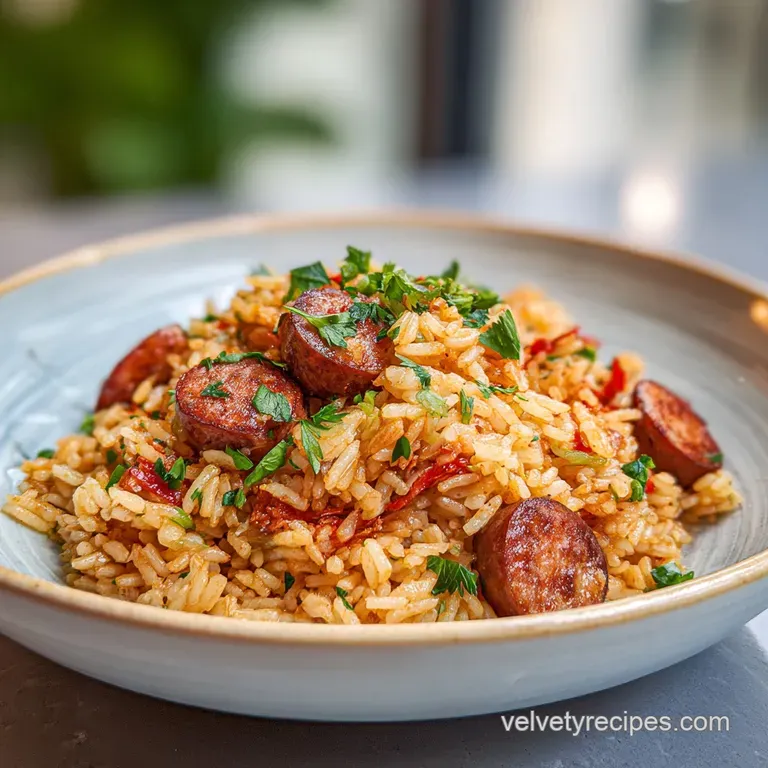
- Time: Active 10 minutes, Passive 25 minutes, Total 35 minutes
- Flavor/Texture Hook: Savory, salty pops of sausage with fluffy, aromatic golden rice.
- Perfect for: Budget-friendly weeknight dinners or quick family gatherings.
- Mastering This Easy Cuban Sausage Rice
- Key Techniques for Flavor Success
- Component Analysis and Pro Secrets
- Required Ingredients and Substitutions
- Official Recipe Specifications
- The Step by Step Process
- Fixing Common Cooking Mistakes
- Scaling and Variation Ideas
- Debunking Kitchen Myths
- Storage and Reheating Methods
- Serving and Presentation Tips
- High in Sodium
- Recipe FAQs
- 📝 Recipe Card
Mastering This Easy Cuban Sausage Rice
I still remember the specific, high pitched sizzle of Vienna sausages hitting hot olive oil in my aunt’s kitchen. It’s a scent that instantly brings me back to humid Florida afternoons where "struggle meals" were transformed into something that smelled like a million dollars.
She’d pop those tiny cans open, and within twenty minutes, the whole house smelled like garlic, cumin, and toasted rice.
This dish is the ultimate proof that you don't need a massive grocery budget to create something deeply satisfying. While some might look down on canned proteins, in this specific context, they are the star.
They release a salty, savory fat that coats every single grain of rice, creating a velvety mouthfeel that harder meats just can't replicate. It’s pure comfort food, designed to be shared and eaten while it’s still steaming.
We are going to focus on building layers of flavor using the "sofrito" method. By browning the meat first and then toasting the rice in that leftover fat, we ensure that the finished product isn't just yellow rice, but a complex, savory masterpiece.
Trust me on this: once you see how those humble sausages transform, you’ll keep a few cans in your pantry at all times.
Key Techniques for Flavor Success
Maillard Reaction: Browning the sliced sausages creates a crust of amino acids and sugars, adding a savory depth that raw sausages lack. This "fond" on the bottom of the pan becomes the flavor base for the entire dish.
Starch Gelatinization: Toasting the medium grain rice in olive oil before adding liquid coats each grain in fat. This prevents the grains from bursting and sticking together, ensuring a fluffy result rather than a mushy one.
Deglazing Mechanism: Using dry white wine (Vino Seco) releases the browned bits from the pan. The alcohol helps carry aromatic compounds from the garlic and onions into the rice grains.
Carryover Steaming: Letting the rice rest off the heat for 5 minutes allows the moisture to redistribute. This final step is what creates that ideal, tender bite without leaving the bottom of the pot soggy.
Similar to the balance of flavors in a Dominican Yellow Rice recipe, this method relies on the rice absorbing every drop of seasoned liquid.
| Method | Time | Texture | Best For |
|---|---|---|---|
| Stovetop | 35 minutes | Fluffy with potential crust | Traditionalists wanting best flavor |
| Rice Cooker | 30 minutes | Very soft and consistent | Set it and forget it weeknights |
| Instant Pot | 22 minutes | Dense and moist | Maximum speed and efficiency |
Choosing your method depends on how much you value that slightly crispy bottom, known as socarrat or pegao. The stovetop method gives you the most control over that golden crust, which many consider the best part of the meal.
Component Analysis and Pro Secrets
| Ingredient | Science Role | Pro Secret |
|---|---|---|
| Medium Grain Rice | High amylopectin for creaminess | Never rinse if you want a slightly "sticky" Cuban style. |
| Vienna Sausages | Emulsified fats for savory base | Slice them thick so they don't disappear into the rice. |
| Bijol Powder | Natural coloring (Annatto based) | A tiny pinch goes a long way; too much can taste earthy. |
| Vino Seco | Acidity to cut through fat | Use a dry cooking wine to keep the rice from being too sweet. |
Required Ingredients and Substitutions
To get this right, you'll need a mix of pantry staples and fresh aromatics. Each piece plays a role in the final aroma.
- 2 cans (9 oz total) Vienna Sausages: Sliced into 1/2 inch rounds. Why this? They provide a soft, salty contrast to the rice.
- Substitute: Smoked frankfurters or Spanish Chorizo (adds more spice).
- 2 cups medium grain white rice: Do not use long grain if you want the authentic texture. Why this? Absorbs liquid better while staying tender.
- Substitute: Arborio rice (will be creamier, like a risotto).
- 1 medium yellow onion: Finely diced.
- Substitute: White onion or shallots for a milder bite.
- 1 green bell pepper: Finely diced.
- Substitute: Red bell pepper for extra sweetness.
- 4 cloves garlic: Minced fresh.
- Substitute: 1 tsp garlic powder (though fresh is significantly better).
- 1/4 cup tomato sauce: For acidity and color.
- Substitute: 1 tbsp tomato paste mixed with a little water.
- 3 cups low sodium chicken broth: The main cooking liquid.
- Substitute: Vegetable broth or water with a bouillon cube.
- 1/2 cup dry white wine (Vino Seco): The "secret" Cuban ingredient.
- Substitute: 1 tbsp apple cider vinegar mixed with water.
- 1 tsp Bijol or turmeric powder: For that iconic golden hue.
- 1 tsp dried oregano: Earthy balance.
- 1/2 tsp ground cumin: Smoky depth.
- 1/4 cup jarred pimientos: For garnish and sweetness.
- 1/2 cup frozen sweet peas: Added at the very end.
- 1 tbsp olive oil: For sautéing.
Chef's Tip: Freeze your sausages for 10 minutes before slicing. It makes them firmer and prevents them from squishing while you cut those 1/2 inch rounds.
Official Recipe Specifications
To ensure your Cuban Sausage Rice turns out exactly right, keep these numeric checkpoints in mind. Accuracy with the liquid ratio is the difference between fluffy rice and a pot of mush.
- Liquid to Rice Ratio: 1.75 : 1 (Total liquid is 3.5 cups for 2 cups of rice).
- Sauté Temperature: Medium high (enough to hear a distinct sizzle).
- Resting Period: Exactly 5 minutes (no peeking under the lid!).
- Vegetable Dice Size: 1/4 inch (uniformity ensures even cooking).
If you’re looking for a protein heavy companion to this meal, the savory notes pair well with a Cowboy Butter Chicken recipe if you want to skip the traditional sides and go for a fusion feast.
The step-by-step Process

- Sizzle the sausages. Heat 1 tbsp olive oil in a heavy bottomed pot over medium high heat and add the sliced Vienna sausages. Sauté for 4 minutes until the edges are browned and slightly crisp.
- Build the sofrito. Add the diced yellow onion and green bell pepper to the pot. Sauté for 5 minutes until the onions are translucent and soft. Note: This creates the aromatic foundation.
- Aromatize with garlic. Stir in the minced garlic. Cook for 1 minute until you can smell the punchy aroma without letting it brown.
- Incorporate the base. Pour in the 1/4 cup tomato sauce, cumin, oregano, and Bijol. Stir for 2 minutes until the sauce darkens and bubbles.
- Toast the rice. Add the 2 cups of medium grain rice to the pot. Stir constantly for 3 minutes until the grains look slightly translucent at the edges.
- Deglaze the pan. Pour in the 1/2 cup white wine. Scrape the bottom of the pot with a wooden spoon until all the browned bits are dissolved.
- Simmer the rice. Add the 3 cups chicken broth. Bring to a boil, then reduce heat to low and cover tightly. Simmer for 18 minutes until the liquid is fully absorbed.
- Steam the finishing touches. Remove from heat. Quickly lift the lid, scatter the 1/2 cup frozen peas and 1/4 cup pimientos on top. Replace the lid immediately.
- The final rest. Let the pot sit undisturbed for 5 minutes until the peas are bright green and the rice is set.
- Fluff and serve. Use a fork to gently toss the rice, mixing the sausages and vegetables throughout before plating.
Fixing Common Cooking Mistakes
One of the biggest heartbreaks in a home cook's life is lifting a lid to find "sopa" (soup) or "marmol" (hard rice). Usually, this comes down to heat management or impatient stirring.
Why Your Rice Is Mushy
If the grains have lost their shape and turned into a paste, you likely had too much liquid or stirred it while it was simmering. Stirring releases starch, which creates a gluey texture. If this happens, don't throw it out!
Spread it on a baking sheet and bake at 200°C for 10 minutes to dry it out slightly.
Why Your Rice Is Crunchy
Under cooked rice usually means the steam escaped. This happens if your lid doesn't fit tightly or if you kept opening it to "check." If it's still crunchy after the time is up, add 2 tablespoons of hot broth, seal the lid with foil, and cook on the lowest setting for another 5 minutes.
| Problem | Root Cause | Solution |
|---|---|---|
| Burnt Bottom | Heat was too high during simmer | Use a heat diffuser or a heavier pot like cast iron. |
| Pale Rice | Not enough Bijol or tomato sauce | Stir in a tiny bit more turmeric mixed with water at the end. |
| Greasy Texture | Too much oil in the initial sauté | Blot the sausages with a paper towel after browning. |
Common Mistakes Checklist
- ✓ Never stir the rice after you have covered the pot (prevents gumminess).
- ✓ Ensure the chicken broth is at least room temperature before adding (prevents temperature drops).
- ✓ Use a heavy lid; if it's loose, place a clean kitchen towel between the pot and the lid.
- ✓ Don't skip the browning of the sausages; it's where the "meaty" flavor comes from.
- ✓ Check the expiration on your spices; old cumin loses its smoky punch.
Scaling and Variation Ideas
If you need to feed a crowd or just yourself, this recipe is incredibly forgiving. Just remember that rice physics changes when you change the volume.
Scaling Down (1/2 Batch) Use a smaller pot to maintain the depth of the liquid. Reduce the cooking time by about 3 minutes, as smaller volumes of rice reach temperature faster. You can use a single can of sausages and half a bag of frozen peas easily.
Scaling Up (Double Batch) When doubling, do not double the spices exactly. Use 1.5x the salt and spices first, then taste the broth before it boils. Use a wide Dutch oven rather than a tall pot to ensure even heat distribution. You may need to extend the simmering time by 5 minutes.
For a spicy twist, you could treat this like a base for other proteins. Sometimes I add leftover Mediterranean Chicken Patties on the side for a protein packed lunch that lasts all week.
Debunking Kitchen Myths
"You must rinse rice until the water is clear." This isn't always true for Cuban dishes. Rinsing removes the surface starch that actually helps create the slightly cohesive, "together" texture that is traditional for Arroz con Salchichas. If you want individual, dry grains like Basmati, rinse.
If you want authentic Cuban comfort, skip the rinse.
"Canned sausages are already cooked, so you don't need to fry them." While they are technically safe to eat out of the can, skipping the sauté step is a flavor crime. Frying them renders out the fat and creates the Maillard reaction that flavors the rice grains from the inside out.
Storage and Reheating Methods
Storage: Store leftovers in an airtight container in the fridge for up to 4 days. The flavors actually deepen overnight as the spices meld. For freezing, this rice holds up well for up to 3 months. Let it cool completely before bagging it to prevent ice crystals.
Zero Waste Tip: If you have leftover rice that’s gotten a bit dry, don't toss it. Mix it with an egg and some breadcrumbs, form them into small cakes, and pan fry them. It makes incredible "Arroz Frito" patties that are crispy on the outside and velvety on the inside.
You can also use the leftover pimiento liquid in your next salad dressing for a punch of acidity!
Serving and Presentation Tips
Presentation is everything when you're serving a "pantry meal." I love serving this in the same pot it was cooked in there's something so rustic and inviting about a heavy Dutch oven in the middle of the table.
Top it with extra fresh parsley or even a few slices of avocado to add a creamy, cool contrast to the warm, spiced rice.
For the ultimate experience, serve it with a side of fried sweet plantains (maduros). The sweetness of the plantains cuts through the saltiness of the sausages perfectly. If you’re feeling extra, a squeeze of fresh lime juice right before eating will shatter through the richness and make the flavors pop.
Just remember, this is a hearty home cook meal no need for fancy plating, just big spoons and hungry friends.
High in Sodium
840 mg mg of sodium per serving (37% % of daily value)
The American Heart Association recommends limiting sodium intake to no more than 2,300 mg per day for most adults.
Tips to Reduce Sodium in this Recipe
-
Broth Swap-30%
Use no-sodium or very low-sodium chicken broth instead of regular low-sodium broth. This simple switch significantly reduces the sodium content.
-
Reduce Sausage-25%
Vienna sausages are a major source of sodium. Use only one can instead of two, or substitute with half the amount of cooked, unseasoned chicken breast for a healthier option.
-
Tomato Sauce Tweak-20%
Choose a no-salt added tomato sauce. Regular tomato sauce can contribute a significant amount of sodium to the dish.
-
Spice it Up!
Enhance the flavor with fresh herbs and spices! Experiment with different combinations like smoked paprika, garlic powder (instead of minced garlic), or a pinch of cayenne pepper to boost taste without adding sodium.
-
Skip Pimientos-10%
Omit the jarred pimientos entirely or use fresh roasted red peppers. Jarred pimientos are preserved in brine, which significantly increases their sodium content.
-
Rice Rinse-5%
Rinse the rice thoroughly before cooking to remove any excess starch and traces of sodium.
Recipe FAQs
Can I substitute fresh sausage for Vienna sausages?
No, the texture will change significantly. Vienna sausages release a specific rendered fat that flavors the rice base; fresh sausage fat behaves differently.
How to ensure the rice is fluffy and not sticky?
Toast the dry rice in the sausage fat first. Coating the grains before adding liquid prevents starch release, ensuring separation, much like the technique used for the Classic Onion Cake recipe for crust development.
Is it true that I must rinse the medium grain rice before cooking this?
No, this is a common misconception for this specific style. Skipping the rinse allows the rice to absorb more seasoned liquid and creates a slightly cohesive, comforting texture.
How to adjust the cooking time if I double the recipe?
Extend the simmering time by about 5 minutes. Larger volumes of liquid take longer to absorb, but the initial sauté time for the aromatics should remain the same for maximum flavor building.
What should I use if I don't have Bijol powder for color?
Use a small pinch of turmeric powder. Turmeric provides a very similar golden hue, but use it sparingly as too much can introduce an earthy flavor you might not want.
How to store and reheat leftovers for best quality?
Store refrigerated for up to 4 days and reheat gently with a splash of broth. The flavors deepen overnight, and adding a small amount of moisture during reheating restores the rice's tenderness.
What is the best side dish pairing for this savory rice?
Fried sweet plantains (maduros) are the traditional pairing. Their sweetness perfectly balances the salty, savory notes from the sausages and cumin in the rice base.
Cuban Sausage Rice Recipe

Ingredients:
Instructions:
Nutrition Facts:
| Calories | 458 kcal |
|---|---|
| Protein | 10.4 g |
| Fat | 14.2 g |
| Carbs | 66.5 g |
| Fiber | 2.8 g |
| Sugar | 2.1 g |
| Sodium | 840 mg |
