Keto Chicken Crust Pizza: Garlic and Herb Infused
- Time: Active 15 minutes, Passive 25 minutes, Total 40 minutes
- Flavor/Texture Hook: Savory, herb infused base with a shatter crisp edge
- Perfect for: High protein weeknight dinners or keto friendly movie nights
- Why Most Recipes Fail at Keto Pizza
- Precision Metrics for This Recipe
- Component Analysis of Key Elements
- Ingredients and Smart Substitutes
- Essential Tools for Busy Cooks
- Bringing the Pizza Together
- Fixing Common Pizza Disasters
- Scaling the Recipe for Crowds
- Common Kitchen Misconceptions
- Storage and Zero Waste Tips
- Best Ways to Serve and Enjoy
- Recipe FAQs
- 📝 Recipe Card
Nothing kills the vibe of a pizza night faster than a slice that flops over like a wet napkin the second you pick it up. I’ve been there, staring at a plate of "keto pizza" that required a fork and a lot of imagination to enjoy.
The smell of the bubbling mozzarella was there, and the garlic aroma filled the kitchen, but the texture was a rubbery, steamed mess. It felt like I was eating a flattened chicken nugget topped with sauce, which, let’s be honest, is a culinary heartbreak when you’re craving a real slice.
This article shares our ultimate Low Carb Keto Chicken Crust Pizza Recipe with Garlic and Herbs. This isn't just a workaround for people avoiding grains; it’s a legitimate way to get that savory, salty, herb forward bite that actually satisfies.
We are skipping the complicated nut flours and the moisture heavy cauliflower and going straight to a protein based foundation that holds its own under a mountain of toppings.
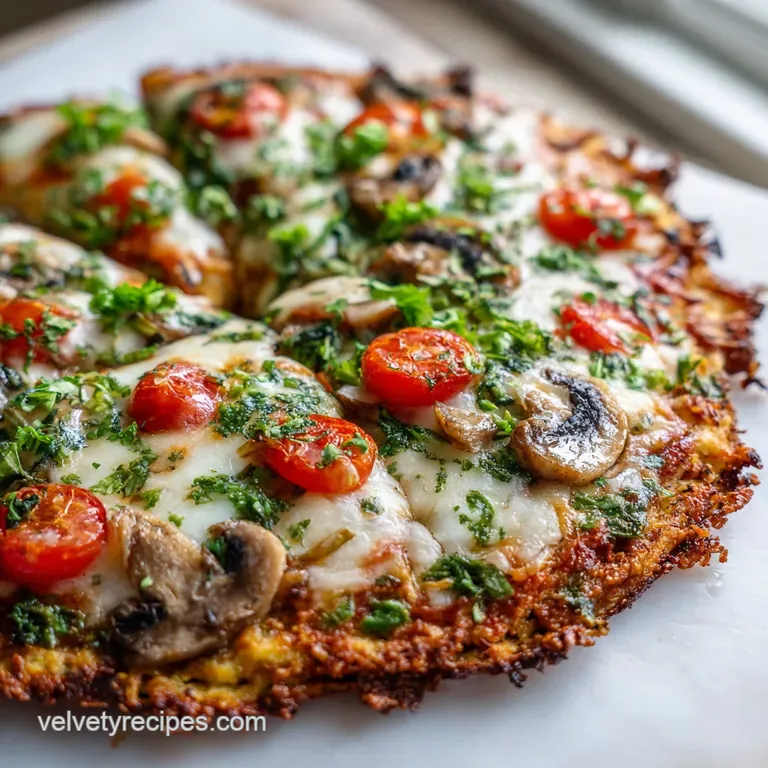
The trick I discovered and the one we’re leaning into today is all about moisture management and the structural support of hard cheese. By the time this leaves your oven, the edges will have a deep mahogany brown hue and a firm texture that actually "snaps" when you bite into it.
You get the hearty comfort of a home cooked meal that tastes like a million dollars without the carb heavy aftermath.
Why Most Recipes Fail at Keto Pizza
Protein Denaturation: Heating the ground chicken tightly binds the fibers, while the egg proteins act as a secondary "glue" to prevent crumbling.
Moisture Evaporation: over High heat par baking at 400°F (200°C) forces water out of the meat before the sauce is added, ensuring a crisp finish.
Fat Based Binding: Freshly grated Parmesan contains less moisture and more structural fat than pre shredded versions, helping the crust "fry" slightly against the parchment.
Aromatic Infusion: Fresh minced garlic releases essential oils during the first bake, deeply flavoring the base rather than just sitting on top.
| Thickness | Internal Temp | Rest Time | Visual Cue |
|---|---|---|---|
| 1/4 inch | 165°F (74°C) | 3 minutes | Deep mahogany edges |
| 1/2 inch | 165°F (74°C) | 5 minutes | Golden but flexible |
| 1/8 inch | 165°F (74°C) | 2 minutes | Shatter crisp crackers |
Most home cooks struggle with chicken crust because they treat it like dough instead of meat. Meat contains water a lot of it. If you don't par bake it long enough, that water stays trapped under the sauce, resulting in a soggy bottom.
By using a combination of lean ground chicken and hard Parmesan cheese, we create a matrix that stays firm even when weighed down by marinara and mozzarella.
Precision Metrics for This Recipe
To get consistent results, you need to hit three specific numeric checkpoints. First, the thickness must be exactly 1/4 inch; anything thicker stays spongy, and anything thinner burns before the cheese melts.
Second, your oven must be fully preheated to 400°F (200°C) before the pan goes in. Third, the par bake must last a minimum of 15 minutes.
| Feature | Fresh Ground Chicken | Canned Chicken (Shortcut) |
|---|---|---|
| Texture | Hearty and meaty | Softer, more processed |
| Prep | Requires kneading | Needs thorough draining |
| Flavor | Rich and savory | Salty and neutral |
While using fresh ground chicken provides the most hearty results, I’ve seen people use canned chicken in a pinch. If you go the canned route, you must squeeze every single drop of liquid out using a kitchen towel, or your pizza will be a soup.
Personally, I stick to fresh ground chicken because the texture is far superior and it feels more like a real meal.
Component Analysis of Key Elements
| Ingredient | Science Role | Pro Secret |
|---|---|---|
| Ground Chicken | Primary Protein | Use 93/7 lean for the best structure without excess grease |
| Parmesan Cheese | Binder & Crisping Agent | Grate it fresh to avoid anti caking starches that cause sogginess |
| Large Egg | Protein Emulsifier | Beat it slightly before adding to ensure even distribution |
When selecting your ingredients, think about the salt balance. Parmesan is naturally salty, so we only use 1/4 tsp of sea salt. If you're a fan of deeper, more complex flavors, you might even consider adding a bit of lemon pecorino chicken style seasoning by swapping the Parmesan for Pecorino Romano for a sharper bite.
Ingredients and Smart Substitutes
- 1 lb ground chicken: The canvas of our pizza. Why this? Provides a neutral, high protein base that mimics dough structure.
- Substitute: Ground turkey (similar texture, slightly gamier flavor).
- 1/2 cup freshly grated Parmesan cheese: The structural glue. Why this? Melts into the meat to create a firm, crisp crust.
- Substitute: Grana Padano or Pecorino Romano.
- 1 large egg: The binder. Why this? Keeps the chicken from falling apart after baking.
- Substitute: 1 flax egg (though texture will be significantly softer).
- 2 cloves fresh garlic, minced: The flavor punch. Why this? Fresh garlic provides a pungent, spicy aroma that dried powder lacks.
- Substitute: 1 tsp garlic paste.
- 1 tsp dried oregano & 1/2 tsp dried basil: The classic pizza profile. Why this? Dried herbs hold up better during the long over high heat bake.
- Substitute: Italian seasoning blend.
- 1/2 tsp onion powder: The savory depth. Why this? Adds umami without the moisture of fresh onions.
- Substitute: Dried chives.
- 1/4 tsp sea salt & 1/4 tsp cracked black pepper: The essentials. Why this? Enhances the natural flavors of the meat and herbs.
- Substitute: Kosher salt.
- 1/3 cup low sugar Marinara sauce: The moisture. Why this? Keeps the carbs low while providing that essential tomato acidity.
- Substitute: Basil pesto or garlic infused olive oil.
- 1.5 cups shredded whole milk mozzarella: The finishing touch. Why this? Provides the best "cheese pull" and creamy mouthfeel.
- Substitute: Provolone or a Monterey Jack blend.
Essential Tools for Busy Cooks
You don't need a pizza stone or a fancy wood fired oven for this. In fact, a simple rimmed baking sheet (like a Nordic Ware half sheet) is actually better because it allows for even heat circulation. The most critical tool is actually the parchment paper.
Ground chicken is incredibly sticky, and without parchment, you'll be scraping your dinner off the pan with a putty knife.
You will also need a large mixing bowl and a rolling pin. If you don't have a rolling pin, a large smooth wine bottle or even just your hands will work, though the rolling pin ensures that 1/4 inch precision that we’re looking for.
Using minimal tools makes the cleanup a breeze, which is exactly what a hearty home cook needs on a Tuesday night.
Bringing the Pizza Together
- Preheat your oven to 400°F (200°C). Prepare a baking sheet with a fresh sheet of parchment paper. Note: This ensures the crust doesn't stick.
- In a large mixing bowl, combine the 1 lb ground chicken, 1/2 cup Parmesan cheese, 1 large egg, 2 cloves minced garlic, 1 tsp oregano, 1/2 tsp basil, 1/2 tsp onion powder, 1/4 tsp salt, and 1/4 tsp pepper.
- Knead the mixture by hand until it forms a uniform, cohesive paste. until no streaks of egg or clumps of cheese remain.
- Place the chicken mixture between two sheets of parchment paper.
- Use a rolling pin to press the dough until it is an even 1/4 inch thick. Remove the top layer of parchment paper.
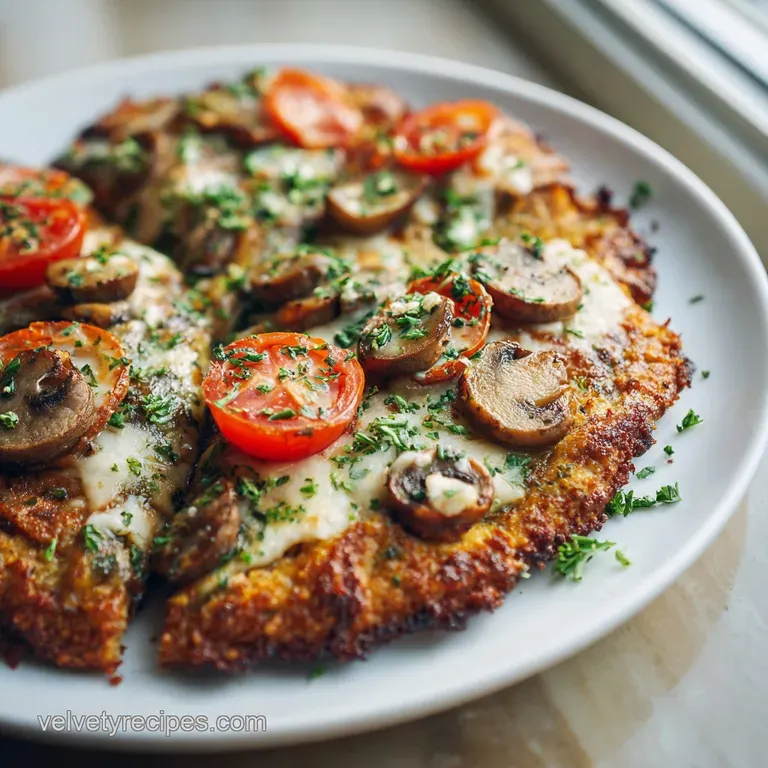
- Par bake the crust at 400°F for 15–20 minutes. until the edges are a deep mahogany brown and the surface feels firm.
- Remove the crust from the oven. Spread 1/3 cup marinara evenly across the base. Note: Leave a small border for a "crust" feel.
- Top with 1.5 cups shredded mozzarella.
- Return to the oven for an additional 5-10 minutes until the cheese is melted and bubbling.
- Let it rest for 3 minutes before slicing. until the structure sets for a clean cut.
Fixing Common Pizza Disasters
If your crust feels a bit soft in the center, it usually means the chicken was too cold when it went into the oven, or the oven wasn't truly at 400°F. Always use a thermometer to check your oven's accuracy.
Another common issue is the "grease pool" this happens if you use ground chicken with a high fat content. If you see liquid on the pan after the par bake, simply blot it away with a paper towel before adding your toppings.
Why Your Crust Is Sticking
The most common reason for sticking is using wax paper instead of parchment paper, or trying to grease the pan directly. Meat proteins bond to metal like glue when heated. Always use high-quality parchment paper.
If it still sticks, let the crust cool for an extra minute; as the proteins contract, they often release from the paper naturally.
Why Your Crust Is Rubbery
A rubbery texture is usually the result of "steaming" rather than "roasting." This happens if the chicken is too thick or if you don't use enough Parmesan cheese. The cheese provides the fat that helps the crust fry against the parchment, creating that velvety yet firm texture.
| Problem | Root Cause | Solution |
|---|---|---|
| Soggy Middle | Under baked or too much sauce | Increase par bake by 5 mins; limit sauce to 1/3 cup |
| Crumbly Base | Missing egg or low Parmesan | Ensure 1 large egg is used; don't skip the cheese |
| Burnt Edges | Crust rolled too thin at sides | Ensure uniform 1/4 inch thickness across the whole pan |
Common Mistakes Checklist
- ✓ Pat the ground chicken dry if it looks excessively wet before mixing.
- ✓ Use freshly grated Parmesan (the stuff in the green can has fillers that ruin the texture).
- ✓ Never skip the par bake; adding sauce to raw chicken results in a culinary disaster.
- ✓ Let the pizza rest for 3 full minutes before slicing to allow the proteins to firm up.
- ✓ Ensure the oven is preheated for at least 15 minutes before starting.
Scaling the Recipe for Crowds
If you are cooking for a larger family, you can easily double this recipe. Use 2 lbs of chicken and two separate baking sheets. Do not try to make one massive pizza on a single sheet, as the center will never get crisp. For the spices, only scale them to 1.5x to avoid an overwhelming herb flavor.
If you're scaling down for one person, use 1/4 lb of chicken, beat one egg and use only a tablespoon of it, and reduce the bake time by about 5 minutes.
When baking two pizzas at once, rotate your pans halfway through the par bake. Most home ovens have "hot spots," and rotating ensures that both crusts reach that deep mahogany color at the same time. If you’re looking for other hearty options to serve alongside, this pairs incredibly well with a white chicken chili if you’re hosting a "chicken themed" buffet night.
| Servings | Ground Chicken | Cheese Amount | Pan Size | Cook Time |
|---|---|---|---|---|
| 2 people | 1/2 lb | 3/4 cup total | 9x9 inch | 20 mins |
| 4 people | 1 lb | 2 cups total | 13x18 in | 25 mins |
| 8 people | 2 lbs | 4 cups total | Two pans | 30 mins |
Common Kitchen Misconceptions
One major myth is that you can't get a "crispy" crust without flour. This is simply not true. While the texture isn't an exact replica of a gluten based sourdough, the combination of over high heat dehydration and fat rendering from the cheese creates a structural integrity that is surprisingly close to a thin crust tavern style pizza.
Another misconception is that ground chicken is always "dry." Because we are adding an egg and a significant amount of cheese, the crust stays moist on the inside while the outside crisps up. It’s a delicate balance of protein and fat that results in a hearty, satisfying bite every single time.
Storage and Zero Waste Tips
If you have leftovers, this pizza keeps remarkably well in the fridge for up to 4 days. Store the slices in an airtight container with a piece of paper towel to absorb any excess moisture. To reheat, avoid the microwave at all costs it will turn your beautiful crust back into a rubbery mess.
Instead, pop the slices into a dry skillet over medium heat for 3-5 minutes or back into a 400°F oven for 5 minutes until the cheese sizzles again.
For zero waste, don't throw away the ends of your Parmesan wedge! Those rinds are flavor gold. You can toss them into a soup or a slow cooker meal to add a deep, nutty umami. If you have extra ground chicken that didn't make it into the crust, it can be browned and used as a topping, or saved for a quick breakfast scramble the next morning.
You can even freeze the par baked crusts for up to 3 months just wrap them tightly in plastic wrap and foil.
Best Ways to Serve and Enjoy
To take this meal to the next level, I always finish it with a sprinkle of fresh red pepper flakes and a drizzle of high-quality olive oil. The heat from the flakes cuts through the richness of the mozzarella, while the oil adds a silky finish to the herbs.
Serving this with a simple side salad of arugula and lemon vinaigrette provides the necessary acidity to balance the savory chicken base.
If you’re feeling adventurous, try a "White Pizza" variation by swapping the marinara for a thin layer of ricotta and topping it with spinach and more garlic. No matter how you top it, the key is the crust.
Once you master the par bake and the 1/4 inch roll, you'll never feel like you're "missing out" on pizza night again. It’s comfort food that treats you right, and honestly, that’s worth its weight in gold.

Recipe FAQs
Is it true I should use a microwave to reheat my leftover pizza?
No, this is a common misconception. Microwaving this crust results in a rubbery texture, so you should reheat slices in a dry skillet over medium heat for 3-5 minutes or in a 400°F oven for 5 minutes.
How to ensure the chicken crust gets crispy?
Par-bake the crust at 400°F for 15 20 minutes until the edges reach a deep mahogany brown and the surface feels firm and dry to the touch before adding any toppings.
Can I use pre-shredded cheese for the crust mixture?
No, stick with freshly grated Parmesan. Pre-shredded varieties often contain anti caking starches that prevent the cheese from binding correctly with the chicken, compromising your crust structure.
How to achieve a uniform thickness for the crust?
Place the mixture between two sheets of parchment paper and use a rolling pin to press it to an even 1/4 inch thickness; if you enjoyed mastering this consistent layering technique here, you will find it equally useful when preparing other low-carb baked goods.
How to store leftovers properly?
Keep slices in an airtight container in the refrigerator for up to 4 days, placing a paper towel inside to absorb any excess moisture and maintain the texture.
Is it necessary to use fresh garlic?
Yes, fresh garlic provides the best flavor profile for this recipe; since the chicken base acts as a blank canvas, the pungency of freshly minced cloves is essential to balance the saltiness of the Parmesan.
How to prevent the chicken from sticking to the parchment?
Use a fresh sheet of parchment paper for every baking session, as re-using a sheet can cause the protein in the chicken to bond with previous residue and tear when you attempt to flip or serve the pizza.
Keto Chicken Crust Pizza
Ingredients:
Instructions:
Nutrition Facts:
| Calories | 398 kcal |
|---|---|
| Protein | 37.6 g |
| Fat | 25.2 g |
| Carbs | 3.3 g |
| Fiber | 0.4 g |
| Sugar | 1.2 g |
| Sodium | 685 mg |
