Traditional Irish Lamb Stew with Lamb Shoulder

- Total2 Hrs 50 Mins
- Calories653 kcal
- CuisineIrish
- Time: 20 min active + 2 hours 30 mins cooking
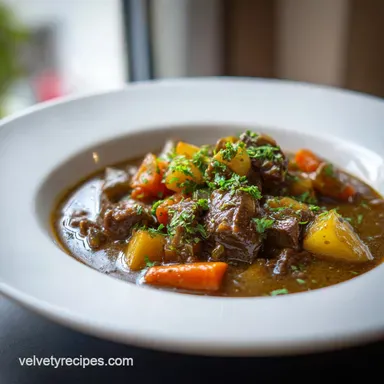
- Texture: Tender, fall-apart meat with a glossy, thick broth
- Serve with: Crusty soda bread or steamed cabbage
Traditional Irish Lamb Stew
Most people end up with meat that feels like rubber or potatoes that dissolve into a thick paste. It happens when you throw everything in the pot at once and hope for the best. The meat doesn't get enough heat to brown, and the vegetables overcook before the lamb is actually tender.
This approach fixes that. We sear the meat in batches to get a deep color and add the root vegetables only in the final hour. This gives you a hearty meal where the lamb is fork-tender and the carrots still hold their shape.
You'll get a rich, deep amber broth that tastes like it simmered all day. It's the kind of food that makes a cold Tuesday feel a lot better.
Choosing Your Cooking Method
| Method | Time | Texture | Best For |
|---|---|---|---|
| Oven Braise | 2 hours 50 mins | Deeply caramelized, thick | Richer flavor, minimal stirring |
| Slow Cooker | 6 to 8 hours | Very soft, lighter broth | Set-it and forget-it days |
The Ingredient List
The meat takes center stage here. Lamb shoulder is the ideal choice for its ability to stay moist. While a boneless leg is a suitable alternative, it is leaner, so you should use a little more oil in the pan.
The base of the dish is a dark vegetable stock.
Ingredients
- 2½ lbs lamb shoulder, cut into 1.5-inch chunks Why this? High collagen for a rich, thick sauce
- 3 tbsp all-purpose flour Why this? Coats meat and thickens broth
- 1 tsp kosher salt
- 1 tsp cracked black pepper
- 3 tbsp vegetable oil
- 1 large yellow onion, diced
- 4 cloves garlic, minced
- 4 cups dark vegetable stock
- 2 tbsp apple cider vinegar Why this? Balances the hearty flavor of the lamb
- 2 bay leaves
- 3 sprigs fresh thyme
- 1½ lbs Yukon Gold potatoes, peeled and cut into 1-inch chunks Why this? Holds shape better than Russets
- 4 large carrots, sliced into thick rounds
- 1 cup frozen peas
- 1/2 cup fresh parsley, chopped
Essential Tools
You only need a few things for this. A 6-quart oven-safe Dutch oven is the main tool. It holds heat evenly and goes straight from the stove to the oven. If you don't have one, any heavy pot with a tight lid that can handle 325°F works.
A wooden spoon is great for scraping the bottom of the pot to get all those browned bits.
Key Steps
Stage 1: The Searing Phase
Preheat the oven to 325°F (160°C). Toss the 2½ lbs lamb chunks in a bowl with 3 tbsp flour, 1 tsp salt, and 1 tsp pepper until evenly coated.
Heat 3 tbsp vegetable oil in a 6-quart oven-safe Dutch oven over medium-high heat. Brown the meat in 3 separate batches to avoid crowding. Cook until the lamb is deep brown on all sides. If the pan is too full, the meat will steam instead of searing. Remove the browned lamb and set it aside on a plate.

Stage 2: Building the Flavor Base
In the remaining fat, sauté 1 diced yellow onion until translucent. Stir in 4 minced garlic cloves and cook for 60 seconds until fragrant.
Pour in 4 cups dark vegetable stock and 2 tbsp apple cider vinegar. Use a wooden spoon to scrape the browned bits from the bottom of the pot. These bits hold most of the flavor.
Stage 3: The Low and Slow Braise
Return the seared lamb and any juices to the pot. Add 2 bay leaves and 3 sprigs fresh thyme.
Bring the liquid to a simmer, cover with a tight-fitting lid, and transfer to the oven. Braise for 90 minutes until the meat begins to soften.

Stage 4: Timing the Vegetables
Remove the pot from the oven. Stir in 1½ lbs potatoes and 4 sliced carrots. Return the covered pot to the oven for 45 to 60 minutes.
Check at 45 minutes. The lamb should be fork-tender and the potatoes tender but not mushy.

Stage 5: The Finishing Touch
Stir in 1 cup frozen peas and 1/2 cup chopped fresh parsley.
If the broth is too thin, mash two or three of the cooked potato chunks against the side of the pot and stir them back in. This uses the natural starch of the potato to thicken the stew without adding more flour.
How to Fix Common Problems

A few things usually go sideways with a homemade stew. The most common issue with Irish lamb stew is a broth that feels too watery or a surface covered in oil.
If your broth is thin, don't add more flour at the end, as it will taste raw. Instead, use the potato-mashing trick mentioned in the steps. If the meat is tough, it usually just needs more time. Collagen doesn't melt instantly, so give it another 30 minutes.
Managing the Fat
Lamb shoulder is fatty. You'll likely see oil droplets on top. Use a wide spoon to skim the fat off the surface before serving. For a cleaner result, you can chill the stew overnight; the fat will solidify on top, making it easy to lift off.
Fixing Thin Broth
If you didn't mash enough potatoes, you can simmer the stew on the stovetop without the lid for 15 minutes. This reduces the liquid and concentrates the flavor.
Handling Overcooked Meat
If the lamb starts to shred and disappear into the sauce, you've gone too far. It's still edible, but the texture is lost. Next time, check the meat at the 90-minute mark.
| Problem | Root Cause | Solution |
|---|---|---|
| Watery Broth | Not enough starch or reduction | Mash 2-3 potato chunks into the sauce |
| Greasy Surface | Natural lamb shoulder fat | Skim with a spoon or chill and lift |
| Tough Meat | Not enough braising time | Return to oven for 30 more mins |
| Mushy Veggies | Added too early in the process | Add root vegetables in the last 60 mins |
Variations & Substitutions
You can tweak this recipe depending on what's in your pantry. If you prefer a different vegetable, parsnips or turnips are a great alternative to this Irish lamb stew. Just add them at the same time as the carrots.
For the meat, you can use beef chunks, but you'll need to increase the braising time by about 30 minutes since beef shoulder (chuck) can be tougher than lamb.
| Original Ingredient | Substitute | Why It Works |
|---|---|---|
| Yukon Gold Potatoes | Red Potatoes | Similar waxiness; they hold their shape well |
| Fresh Thyme | Dried Thyme (1 tsp) | Same flavor, but more concentrated |
| Apple Cider Vinegar | Lemon Juice | Provides the necessary acid to cut the fat |
| Dark Vegetable Stock | Beef Stock | Adds a deeper, meatier profile to the base |
Make-ahead and Leftover Tips
The taste of this meal often improves after a day. This allows the various components to blend more effectively in the fridge.
Store the leftovers in a sealed container in the refrigerator for 3 to 4 days, as suggested by the USDA FSIS. Reheat the stew gently on the stove using medium-low heat, stirring in a little stock or water if the consistency has thickened.
When reheating cooked leftovers, check with a food thermometer that the center reaches 165°F (74°C); the appliance temperature and time alone do not confirm this.
For safety, make sure the dish is heated until it hits 165°F (74°C) throughout.
This dish is great for freezing. Let it cool entirely before transferring to freezer bags. It stays good for roughly 3 months. To serve, defrost it in the refrigerator overnight before reheating on the stove.
When reheating cooked leftovers, check with a food thermometer that the center reaches 165°F (74°C); the appliance temperature and time alone do not confirm this.
Presentation Tips
Don't just plop the stew in a bowl. Ladle it into wide, shallow bowls to show off the chunks of lamb and colorful carrots.
Sprinkle a bit of fresh parsley on top right before serving for a pop of green. Since the broth is rich and glossy, a side of buttered soda bread or a simple heap of steamed cabbage provides a nice contrast in texture and freshness.
What Makes the Texture Work
The key to the mouthfeel is the slow breakdown of collagen. When you braise lamb shoulder at 325°F, the tough tissues transform into gelatin. This doesn't just make the meat tender, it gives the broth a rich, clingy quality.
The flour coating on the meat also plays a role. As the meat browns, the flour toasts and then dissolves into the stock, acting as a light thickener that helps the sauce hold together.
Searing Truths
A common myth is that searing meat "seals in the juices." This isn't true. Searing actually causes the meat to lose a tiny bit more moisture. However, we do it for the flavor. The browning creates complex compounds that give the stew its deep, savory taste.
Potato Selection
I prefer Yukon Golds because they are "all-purpose." They have a creamy texture but aren't as starchy as Russets, meaning they won't turn into mashed potatoes if you simmer them for an extra ten minutes.
Questions Readers Ask
How to make traditional Irish lamb stew?
Brown floured lamb chunks in a Dutch oven, then sauté onion and garlic. Braise the meat in vegetable stock and vinegar for 90 minutes before adding carrots and potatoes to finish.
How is Irish stew different from regular stew?
It specifically features lamb and root vegetables like potatoes and carrots. The flavor is typically lighter than beef-based stews due to the lamb and vegetable stock.
Can I use a slow cooker or the stovetop instead of an oven-safe pot?
Yes, these methods work well for braising. The cooking process remains similar, though temperature control differs between a slow cooker and a direct flame.
Why is my stew too thin, and how can I thicken it?
This happens if the liquid didn't reduce enough. Mash a few cooked potato chunks against the side of the pot and stir them back in.
Which broth should I use: beef, chicken, or vegetable?
Use dark vegetable stock for this recipe. It provides a rich base that complements the lamb without overpowering the other vegetables.
Could I use ground lamb or a bone-in cut instead of cubed boneless meat?
Stick with 1.5-inch chunks of lamb shoulder for the best results. Ground lamb would change the texture significantly, and bone-in cuts may alter the cooking time.
Is it necessary to chill the stew overnight to remove the fat?
No, this recipe does not require overnight chilling to remove fat. You can serve the stew as soon as the meat and vegetables are tender.
Would parsnips or turnips work instead of carrots?
Yes, both are great alternatives to carrots. Just add them to the pot at the same time you add the carrots.
Traditional Irish Lamb Stew with Lamb Shoulder
Ingredients:
Instructions:
Try These Next

Easy Slow Cooker Chicken Stew with Veggies | 6h 10m
Make Irresistibly Easy Slow Cooker Chicken Stew with Vegetables for Comforting Nights using simple…

Authentic Gyro Meat Recipe: Homemade Lamb and Beef
Learn how to make authentic Gyro Meat at home with this step-by-step guide.
