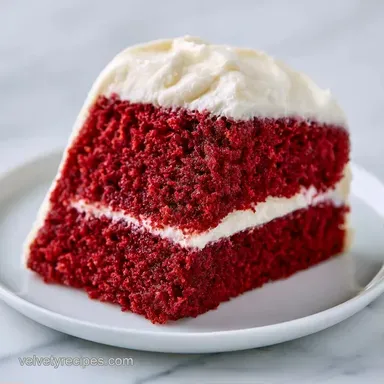
Classic Southern Red Velvet Cake: Velvety and Rich
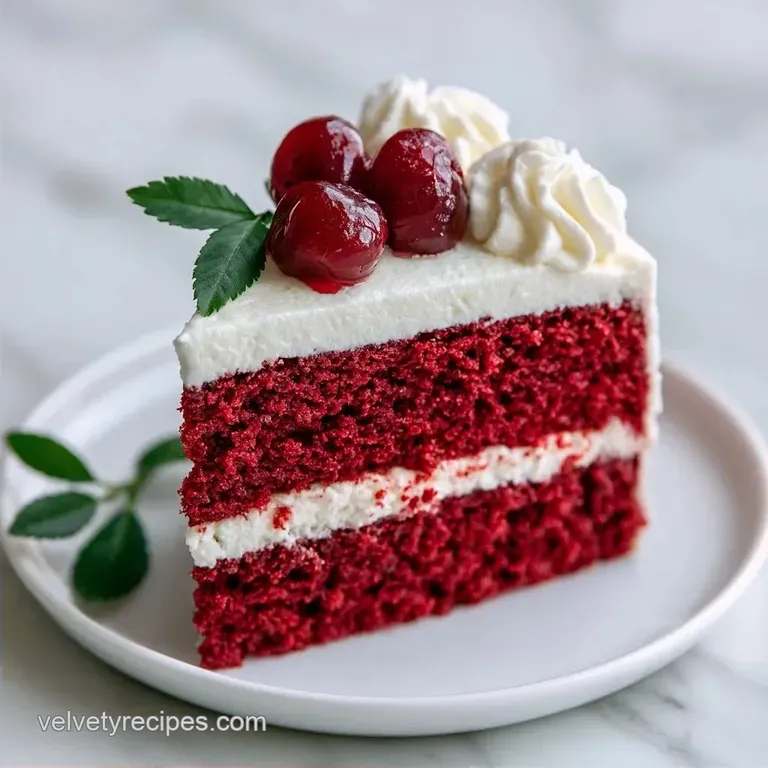
- Time: 30 min active + 2 hours chilling = 3 hours total
- Flavor/Texture Hook: Velvety, tight crumb sponge with a silky, tangy finish
- Perfect for: Holiday parties, family reunions, or an impressive birthday surprise
- Classic Southern Red Velvet Cake Secrets
- The Science Behind The Velvet
- Deep Dive Into The Ingredients
- Everything You Need To Gather
- Essential Tools For The Job
- Putting The Layers Together
- Avoiding Common Baking Mistakes
- Troubleshooting Common Issues
- Flavor Swaps And Variations
- Saving And Storing Your Cake
- Best Pairings For This Cake
- Recipe FAQs
- 📝 Recipe Card
Classic Southern Red Velvet Cake Secrets
The first thing that hits you when you open the oven door is that warm, nostalgic scent. It's not a heavy chocolate smell, but something lighter, with a hint of vanilla and a sharp, clean tang from the buttermilk.
For me, this scent always takes me back to my grandmother's kitchen in Georgia, where the air was thick with humidity and the smell of baking cakes. I remember watching her whisk the red coloring into the batter, turning it into a vibrant, shocking crimson that looked more like paint than food.
Growing up in the South, this cake wasn't just a dessert, it was a centerpiece. It represents a specific kind of hospitality where everything is made from scratch and the frosting is layered on thick.
There's a cultural pride in that "velvety" texture, which originally came from the way cocoa reacted with acid before food dyes were common. We aren't just making a red colored chocolate cake here; we're recreating a tradition that's all about balance and a very specific mouthfeel.
You can expect a cake that feels dense yet soft, with a subtle cocoa depth that doesn't overpower the palate. The real magic happens when that velvety sponge meets the cool, sharp cream cheese frosting. It's an indulgent experience that feels fancy but tastes like home.
Let's get into how we make this happen without the stress.
The Science Behind The Velvet
Understanding what's happening in the bowl helps you avoid the common pitfalls of home baking. This isn't a standard sponge; it's a chemical reaction in a pan.
- Acid Base Lift: The combination of buttermilk and vinegar reacts with the baking soda to create tiny carbon dioxide bubbles. This is what gives the cake its specific, fine grained rise.
- Oil Based Moisture: Unlike butter cakes, using oil ensures the cake stays moist even when refrigerated. According to Serious Eats, oil based cakes have a softer crumb because oil remains liquid at lower temperatures.
- Cocoa Interaction: The small amount of cocoa powder provides the flavor, but the acidity of the buttermilk prevents the cocoa from making the cake too dark, allowing the red hue to pop.
- Frosting Stability: Full fat cream cheese provides the structure. The fat content prevents the powdered sugar from turning into a grainy syrup, keeping it velvety.
| Method | Time | Texture | Best For |
|---|---|---|---|
| Fast (Box Mix) | 45 mins | Airy, slightly artificial | Last minute crowds |
| Classic (Scratch) | 3 hours | Dense, velvety, rich | Special occasions |
Deep Dive Into The Ingredients
I've spent a lot of time figuring out which brands and types of ingredients actually matter here. Some things can be swapped, but others are non negotiable if you want that authentic Southern result.
| Ingredient | Science Role | Pro Secret |
|---|---|---|
| Buttermilk | Acidifier & Tenderizer | Use full fat for a richer, more velvety crumb |
| Vegetable Oil | Moisture Agent | Neutral oils like canola prevent "aftertastes" |
| Cocoa Powder | Flavor & Color Base | Sift it! Cocoa clumps are the enemy of a smooth batter |
| Cream Cheese | Structure & Tang | Must be full fat or the frosting will weep |
Everything You Need To Gather
Right then, let's look at the shopping list. Don't be tempted by low-fat versions of these ingredients. This is an indulgent cake, and the fat is where the texture lives. Honestly, don't even bother with low-fat cream cheese; it just doesn't hold the peak.
For the Cake Batter 2.5 cups all purpose flour Why this? Provides the necessary structure without being too tough 1 cup granulated sugar Why this? Standard sweetness and aids in browning 1 tsp baking soda Why this?
Reacts with acid for the lift 1 tsp salt Why this? Balances the sugar and enhances chocolate 2 tbsp unsweetened cocoa powder Why this? Provides the subtle chocolate undertone 1 cup buttermilk Why this? Essential for the
Tender, velvety crumb 2 large eggs Why this? Bind the batter and add richness 0.5 cup vegetable oil Why this? Ensures the cake stays moist in the fridge 1 tsp white distilled vinegar Why this? Extra boost for the baking soda
Reaction 1 tsp vanilla extract Why this? Rounds out the flavor profile 1 tbsp red food coloring Why this? Gives it the iconic, vibrant look
For the Cream Cheese Frosting 8 oz full fat cream cheese Why this? The primary flavor and stability agent 0.5 cup unsalted butter Why this? Adds silkiness and helps the frosting set 3 cups powdered sugar Why this?
Sweetens and thickens the frosting 1 tsp vanilla extract Why this? Adds a creamy aroma 1g salt Why this? Cuts the cloying sweetness
Ingredient Swap Guide
| Original Ingredient | Substitute | Why It Works |
|---|---|---|
| Buttermilk (1 cup) | 1 cup milk + 1 tbsp lemon juice | Similar acidity. Note: Slightly less creamy than real buttermilk |
| Vegetable Oil (0.5 cup) | Melted Butter (0.5 cup) | Richer flavor. Note: Cake will be firmer and less moist when cold |
| Red Food Coloring | Beet Powder (2 tbsp) | Natural color. Note: Earthier taste and less vibrant red |
| Powdered Sugar (3 cups) | Icing Sugar (3 cups) | Identical result. Note: Sift it first to avoid lumps |
Essential Tools For The Job
You don't need a professional kitchen, but a few basics make this much easier. I usually use a stand mixer such as a KitchenAid for the frosting, but a hand mixer works just fine.
- Two 9 inch round cake pans (essential for the layers).
- Parchment paper (trust me, don't skip this or the cake might stick).
- A whisk and a large mixing bowl.
- A rubber spatula for folding.
- A wire cooling rack.
- Electric mixer for the frosting.
Putting The Layers Together
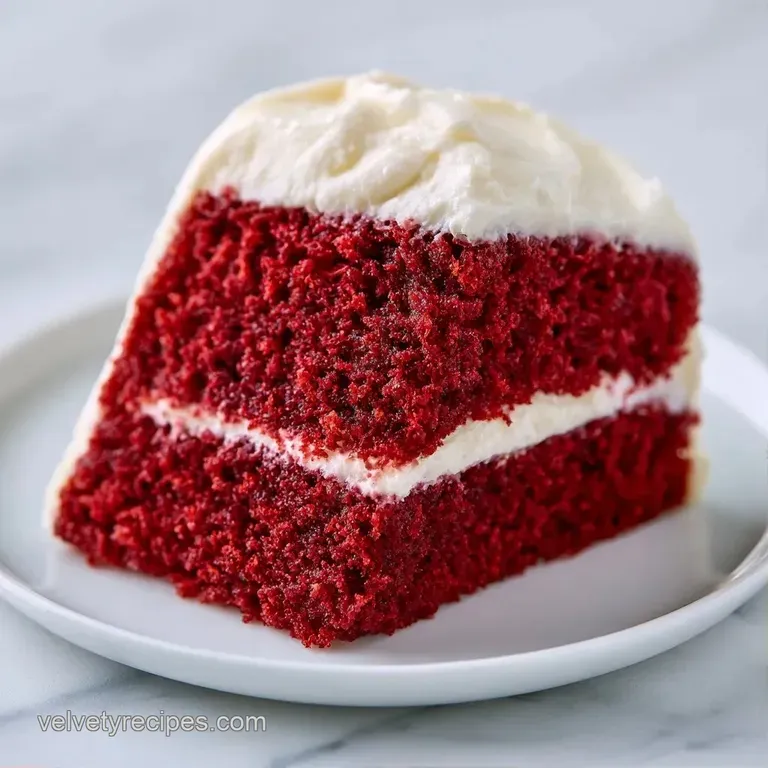
Let's crack on. The most important thing here is not to overmix. If you beat the batter too much, you'll develop too much gluten, and your "velvet" cake will turn into a "bread" cake.
- Preheat oven to 350°F (175°C). Grease two 9 inch round cake pans and line the bottoms with parchment paper. Note: Parchment is your insurance policy.
- In a medium bowl, whisk together the flour, granulated sugar, baking soda, salt, and cocoa powder. until the mixture is a uniform pale brown.
- In a large bowl, beat together the vegetable oil, eggs, buttermilk, vinegar, vanilla extract, and red food coloring until smooth. Note: Make sure the eggs are room temperature for better emulsification.
- Slowly fold the dry ingredients into the wet ingredients until just combined, ensuring no streaks of flour remain. until the batter is a glossy, deep crimson.
- Divide the batter evenly between the two prepared pans and bake for 25–30 minutes, or until a toothpick inserted into the center comes out with only a few moist crumbs. Wait for the aroma of toasted cocoa to fill the room.
- Cool cake layers completely on a wire rack. Note: If you frost a warm cake, your cream cheese frosting will melt into a soup.
- Prepare the frosting by beating together softened cream cheese and butter, then adding powdered sugar, vanilla extract, and salt until smooth. until the texture is silky and holds a peak.
- Frost the cake layers and chill in the refrigerator for 2 hours to ensure frosting stability before serving. Note: This chilling step is where the flavors settle.
- Oven Temp
- Must be exactly 350°F (175°C) for the rise.
- Bake Time
- Start checking at 25 minutes; do not exceed 30 unless your oven runs cold.
- Chill Time
- 2 hours minimum. This is the secret to those clean, professional slices.
Avoiding Common Baking Mistakes
Even the best of us mess up. I once forgot the vinegar in a batch, and the cake came out a weird, brownish red and way too dense. It's all about the chemistry.
Troubleshooting Common Issues
| Issue | Solution |
|---|---|
| Why Your Cake Sinks In The Middle | This usually happens because the oven door was opened too early, or the baking soda was expired. If the structure hasn't set, the sudden temperature drop causes the air bubbles to collapse. |
| Why Your Sponge Is Dry | Overbaking is the main culprit here. Because this cake is red, it's hard to tell when it's "golden brown." Rely on the toothpick test and the smell of the kitchen. |
| Why Your Frosting Is Runny | If your butter or cream cheese was too warm, or if you overbeat the frosting, it can break. If this happens, pop the bowl in the fridge for 15 minutes and beat it again on low. |
The "Don't Do This" Checklist:
- ✓ Don't overmix the batter; stop as soon as the flour disappears.
- ✓ Don't skip the parchment paper; the sugar can caramelize and stick.
- ✓ Don't use cold buttermilk; let it sit out for 30 mins.
- ✓ Don't frost until the cake is completely cold to the touch.
- ✓ Don't use a low-fat cream cheese substitute.
Flavor Swaps And Variations
If you want to play around with this, there are a few ways to do it. But remember, the balance of acid and fat is what makes this a Classic Southern Red Velvet Cake.
The Decision Shortcut: If you want a deeper chocolate hit, add 1 tbsp more cocoa powder (but you may need a drop more red dye). If you want a lighter frosting, fold in a handful of whipped cream to the finished cream cheese mixture.
If you want a "naked" look, only frost the center and top, leaving the sides exposed.
For those who love a variety of textures in their dessert spread, you might enjoy pairing this with something more rustic, like a Classic Onion Cake for a surprising savory sweet contrast at a party.
Dietary Adaptations If you're trying to make this gluten-free, you can use a 1:1 gluten-free flour blend. However, the crumb will be slightly more fragile, so I recommend adding an extra egg white to help with the structure.
For a dairy-free version, you can use a soy based buttermilk substitute and vegan cream cheese, though the flavor will be less tangy and the frosting less stable.
Saving And Storing Your Cake
Because of the cream cheese and butter, this cake needs to be handled carefully. It doesn't like sitting on a hot counter for hours.
Storage Guidelines Keep your cake in an airtight container or a cake dome in the fridge for up to 5 days. The oil in the sponge actually makes it taste better on day two as the flavors meld.
If you're serving it, let it sit at room temperature for about 30 minutes so the frosting softens slightly, making it more velvety.
Freezing Instructions You can freeze the cake layers without frosting for up to 3 months. Wrap them tightly in plastic wrap and then foil. Thaw in the fridge overnight before frosting.
I don't recommend freezing the fully frosted cake, as the cream cheese frosting can sometimes separate or develop a grainy texture upon thawing.
Zero Waste Tips If you have scraps from leveling the cake tops, don't toss them! Crumble them into a glass and layer them with fresh strawberries and a dollop of leftover frosting for a quick "Red Velvet Trifle." Or, freeze the crumbs and use them as a topping for vanilla ice cream.
Best Pairings For This Cake
This cake is quite rich, so you want things that cleanse the palate. A sharp cup of black coffee or a cold glass of whole milk are the traditional choices. For something more fancy, try serving it with a side of fresh raspberries or a tart raspberry coulis to highlight the acidity of the cream cheese.
If you're planning a full brunch spread, this cake is a fantastic dessert to follow after some Homemade English Muffins in the morning. The sweetness of the cake is a great way to end a meal that started with savory, toasted breads.
Myths About Red Velvet One common myth is that Red Velvet is just chocolate cake with red dye. That's not true. A real Classic Southern Red Velvet Cake has a distinct tang and a tighter, more velvety crumb due to the buttermilk and vinegar reaction.
Another misconception is that you can't use oil in a "fancy" cake. In this case, oil is actually superior to butter because it prevents the cake from becoming a brick once it hits the refrigerator. Trust me, the texture is worth it.
Scaling Your Bake If you only need a small treat, you can halve the recipe. Use two 6 inch pans instead of 9 inch, and reduce the baking time by about 20%. If you're doubling it for a huge party, don't just double the baking soda and salt increase them by about 1.5x to avoid a metallic taste.
I suggest baking in batches rather than overcrowding your oven, as this can lead to uneven heat distribution and sunken centers. For double batches, lower the temperature to 325°F (160°C) and extend the time by 5-10 minutes to ensure the center cooks through without burning the edges.
Recipe FAQs
What is the secret ingredient in red velvet cake?
Buttermilk and vinegar. These acids react with the baking soda to create the signature tender crumb and slightly tangy flavor profile.
What is the secret to a perfect red velvet?
Using a minimal amount of cocoa powder. This prevents the chocolate flavor from masking the acidity and keeps the red color vibrant.
Is it true that red velvet is just chocolate cake with red food coloring?
No, this is a common misconception. The chemical reaction between cocoa, buttermilk, and vinegar creates a specific velvety texture that standard chocolate cake lacks.
How to prevent the cake from sinking in the middle?
Avoid opening the oven door prematurely. A sudden temperature drop can cause the air bubbles to collapse before the structure has set.
How to tell when red velvet cake is fully baked?
Insert a toothpick into the center. It should come out with only a few moist crumbs, since the red dye hides traditional golden brown indicators.
Can I make this recipe without buttermilk?
No, buttermilk provides the necessary acidity. If you enjoy this tender crumb, you will love the same technique used in our red velvet bundt.
How to frost a bundt cake version of this recipe?
Apply a thin glaze or use an offset spatula. The centered hole makes a pouring glaze more efficient and visually appealing than traditional layer frosting.
Classic Southern Red Velvet Cake