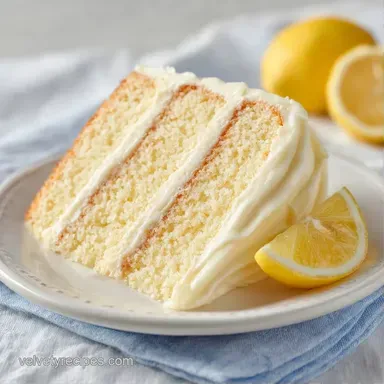
Moist Lemon Velvet Cake: Tender Crumb

- Time:15 minutes active + 2 hours chilling
- Flavor/Texture Hook: Tangy, dense yet-soft crumb with tart curd
- Perfect for: Spring brunches or birthday parties
The smell of fresh lemon zest hitting softened butter is honestly one of the best scents in a kitchen. It's sharp, clean, and instantly makes the room feel brighter. I used to think you needed some professional pastry training or a fancy "velvet" flour blend to get that specific, tight crumb you see in high end bakeries.
I spent a while thinking the "velvet" part was just marketing or required some weird chemical additive.
Forget that. You don't need professional gear or rare ingredients for this. The real trick is just using cake flour and buttermilk. The acid in the buttermilk breaks down the gluten, which keeps the cake from getting tough or bready.
This Lemon Velvet Cake Recipe delivers a slice that feels heavy but melts quickly. It's not a light, airy sponge cake. It's richer and more substantial, especially with the lemon curd layer tucked in the middle. If you've tried my Vanilla Velvet Layer Cake, you'll notice this one has a much punchier profile.
Lemon Velvet Cake Recipe
The goal here is a specific mouthfeel. We want it dense enough to hold the curd, but soft enough to feel luxurious. Most people overmix their batter, which turns a velvet cake into a regular old pound cake. We're going to avoid that by mixing only until the flour disappears.
Right then, let's talk about the layers. You've got the cake base, the concentrated lemon curd, and the cream cheese frosting. Each one adds a different level of tartness. The cake is mellow, the curd is a citrus punch, and the frosting is a sweet, creamy finish.
How the Crumbs Stay Soft
Buttermilk Acid: The acid reacts with the baking soda to create tiny air bubbles that lift the cake without making it fluffy like a sponge.
Cake Flour: This flour has less protein than all purpose, which prevents too much gluten from forming and keeps the texture velvety.
Fresh vs. Shortcut Lemon
Before we dive into the ingredients, you have to decide on your lemon source. Using fresh lemons is always better for the zest, but some people reach for the bottle.
| Feature | Fresh Lemons | Bottled Juice | Impact |
|---|---|---|---|
| Flavor | Bright and floral | Sharp and acidic | Fresh tastes "real," bottled can taste metallic |
| Texture | Natural oils from zest | No zest available | Zest provides the deep aroma |
| Cost | Variable by season | Cheap and consistent | Fresh is worth the extra couple of dollars |
What Each Ingredient Does
I've found that swapping ingredients in a velvet cake can be risky because the chemistry is so specific. Here is why we use these exact items.
| Ingredient | What It Does | Best Swap |
|---|---|---|
| Cake Flour | Keeps the crumb tight and soft | AP flour minus 2 tbsp, add 2 tbsp cornstarch |
| Buttermilk | Tenderizes the gluten | 1 cup milk + 1 tbsp lemon juice (rest 10 mins) |
| Cream Cheese | Adds tang and stability to frosting | Mascarpone (will be sweeter and softer) |
For the flour, I always recommend King Arthur Baking cake flour because it's consistently fine. If you use a standard all purpose flour, the cake will be a bit more "bready" and less like a velvet cake.
Ingredients and Substitutes
For the Cake Base
- 2 ½ cups (315g) cake flourWhy this? Lower protein for a softer crumb
- 1 ½ cups (300g) granulated sugar
- 1 tsp (5g) baking soda
- ½ tsp (3g) salt
- ¾ cup (170g) unsalted butter, softened
- 3 large (150g) eggs, room temperatureWhy this? Prevents the batter from curdling
- 1 cup (240ml) full fat buttermilk, room temperature
- 2 tbsp (12g) lemon zest, finely grated
- 1 tsp (5ml) pure vanilla extract
- ½ cup (120ml) fresh lemon juice
For the Lemon Curd
- ¾ cup (150g) granulated sugar
- 3 large (50g) egg yolks
- 2 tbsp (16g) cornstarch
- 6 tbsp (85g) unsalted butter, cubed
For the Frosting
- 8 oz (225g) full fat cream cheese, softened
- ½ cup (115g) unsalted butter, softened
- 4 cups (500g) powdered sugar, sifted
- 1 tbsp (15ml) lemon juice
- 1 tsp (5g) lemon zest
Step-by-step Instructions

Crafting the Velvet Crumb
- Preheat oven to 350°F (175°C). Grease two 8 inch round cake pans with butter and line the bottoms with parchment paper. Note: Parchment is the only way to ensure a clean release.
- Beat softened butter and granulated sugar on medium high. Do this for 3 minutes until the mixture looks pale and fluffy.
- Add eggs one at a time. Beat well after each egg. Stir in the lemon zest and vanilla extract.
- Sift the cake flour, baking soda, and salt together.
- Add the flour mixture and buttermilk alternately. Start with flour, then buttermilk, and end with flour. Mix on low until just combined. Stop the moment you see no more white streaks.
- Divide batter between pans. Bake for 30–35 minutes until a toothpick comes out with a few moist crumbs. Let them cool completely.
Simmering the Concentrated Curd
- Whisk lemon juice, sugar, egg yolks, and cornstarch in a saucepan.
- Heat over medium. Stir constantly with a whisk until the mixture thickens and bubbles.
- Remove from heat. Stir in cubed butter until the curd is smooth and glossy.
- Pour into a bowl and chill for 2 hours. Note: The curd must be cold or it will leak out of the cake layers.
Assembling the Cake
- Beat softened cream cheese and butter together.
- Gradually add powdered sugar, lemon juice, and lemon zest. Beat until the frosting is silky.
- Level the cooled cake layers with a serrated knife.
- Spread the chilled lemon curd on the first layer. Top with the second layer.
- Frost the top and sides of the cake with the lemon cream cheese frosting.
Common Mistakes & Troubleshooting
I once forgot to let my buttermilk reach room temperature. The result? The batter broke and looked like cottage cheese. It still tasted fine, but the texture was off. For this Lemon Velvet Cake Recipe, temperature is everything.
| Issue | Solution |
|---|---|
| Why Your Cake Sinks | If the center dips, you likely opened the oven door too early. The sudden drop in temp kills the rise. |
| Why Frosting Curdles | This usually happens when the butter is too cold. The cream cheese and butter need to be the same temperature to bond. If it looks grainy, just keep beating it for another 2 minutes. |
| Why the Curd is Runny | You might not have cooked the cornstarch long enough. It needs to reach a simmer to activate the thickening power. |
Adjusting the Recipe
If you want to change the scale of this Lemon Velvet Cake Recipe, keep a few things in mind. Baking is a ratio game.
Scaling Down (Half Batch) Use one 8 inch pan and slice it horizontally. Reduce the bake time by about 20% and check it at 25 minutes. For the eggs, beat one egg in a small bowl and use half of it.
Scaling Up (Double Batch) Don't just double the baking soda and salt; use 1.5x for those. Work in batches if your mixer is small. Lower the oven temp to 325°F and extend the time to ensure the centers cook without burning the edges.
Flavor Variations If you love a more intense citrus hit, try adding a teaspoon of lemon extract to the batter. For a different vibe, you can swap the lemon curd for a raspberry jam layer. This pairs well with the Moist Velvet Vanilla Cake style of base.
Debunking Cake Myths
Sifting flour is not just for "fancy" cakes. For a velvet texture, sifting removes lumps and aerates the flour, which is the only way to get that specific lightness.
Some people think you should grease pans with flour. For this recipe, use butter and parchment. Flour creates a "crust" on the outside of the cake that ruins the velvet feel.
Storage Guidelines
This cake stays fresh in the fridge because of the cream cheese frosting and curd.
Fridge: Store in an airtight container for 3-5 days. Let it sit at room temperature for 30 minutes before serving so the butter in the frosting softens. Freezer: You can freeze the cake layers (without frosting) for up to 3 months.
Wrap them tightly in plastic wrap and foil. Thaw in the fridge overnight.
Zero Waste Tips Don't toss the leftover lemon peels from your zesting. Put them in a jar with sugar to make oleo saccharum (lemon sugar) for your morning toast. If you have a bit of extra lemon curd, swirl it into plain Greek yogurt for a quick breakfast.
Presentation Tips
To get those clean, professional layers, use a cake leveler or a long serrated knife. Cut the domes off the cakes so they sit flat.
For a polished look, do a "crumb coat." Spread a very thin layer of frosting over the whole cake and refrigerate it for 15 minutes. This locks in the crumbs so your final layer of frosting looks smooth and clean.
Finally, garnish the top with thin lemon slices or a few fresh mint leaves. The contrast of the bright yellow lemon against the white frosting makes the whole thing pop.
Recipe FAQs
What's the difference between velvet cake and regular cake?
The texture is finer and more moist. The combination of cake flour and buttermilk creates a dense yet soft "velvety" crumb compared to a standard sponge cake.
What is the secret to a good lemon cake?
Use both zest and fresh lemon juice. Zest provides the aromatic oils while juice adds the necessary acidity; if you loved the sweet-tart balance in this recipe, see how we use the same acid technique in our raspberry iced tea.
How do you prevent a soggy lemon velvet cake?
Bake for 30–35 minutes until a toothpick comes out with a few moist crumbs. Avoid opening the oven prematurely to keep the internal temperature stable and ensure the center sets.
Why did my cake batter look like cottage cheese?
The buttermilk was likely too cold. When cold buttermilk hits softened butter, the emulsion breaks; ensure all ingredients are at room temperature for a smooth batter.
Why did the center of my cake sink?
The oven door was opened too early. This causes a sudden drop in temperature that kills the rise before the cake structure has fully set.
Why is my frosting curdled?
The butter or cream cheese was too cold. Both fats must be the same temperature to bond properly into a silky, smooth frosting.
Can I freeze this cake?
Yes, but only the unfrosted layers. Wrap the cooled cake layers tightly in plastic wrap and foil for up to 3 months, then thaw in the fridge overnight.
Lemon Velvet Cake Recipe with Buttermilk