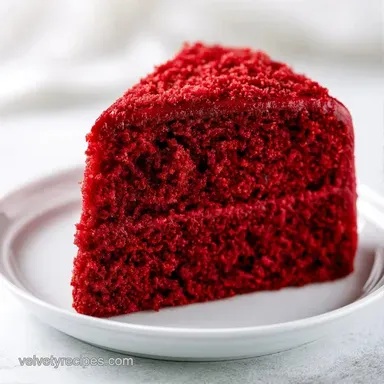
Natural Red Velvet Cake Recipe: Velvety and Moist
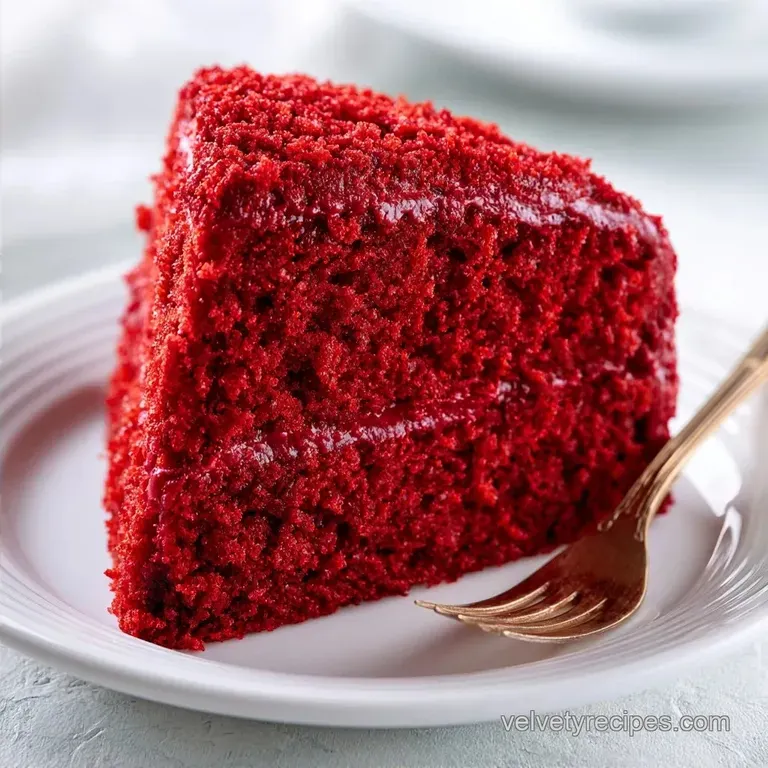
- Time: 20 min active + 2 hours 30 mins cooling/frosting = Total 2 hours 50 mins
- Flavor/Texture Hook: Velvety, moist crumb with a tangy cream cheese finish
- Perfect for: Birthday parties, Valentine's Day, or anyone avoiding artificial food dyes
- The Best Natural Red Velvet Cake Recipe
- Why This Texture Works
- The Essential Building Blocks
- Tools For The Job
- Easy Step-By-Step Guide
- Fixing Common Cake Problems
- Troubleshooting Common Issues
- Adapting The Recipe
- Precision Checkpoints
- Myths About Red Velvet
- Storage And Waste Tips
- Styling Your Final Cake
- Recipe FAQs
- 📝 Recipe Card
Ever wondered why some red velvet cakes look like they were dyed with neon highlighter fluid? For a long time, I thought that blinding red was just part of the deal, until I tried a version that used vegetables for color.
I remember the first time I pulled a beet based cake out of the oven- the smell wasn't like a garden, but like a rich, deep cocoa cloud.
The real magic happens when the beet juice hits the acidity of the buttermilk and vinegar. I once tried making this without the lemon juice in the beet mixture, and the cake came out a muddy, brownish purple. It was a total letdown.
Since then, I've learned that the "lock" is everything if you want that vibrant crimson without touching a bottle of dye.
This Natural Red Velvet Cake Recipe isn't just about the color, though. It's about that specific, tight crumbed texture that feels like silk on the tongue. We're going for a rich chocolate undertone that doesn't overpower the tang of the cream cheese frosting. Trust me on this, once you taste the natural version, the store-bought neon stuff just feels wrong.
The Best Natural Red Velvet Cake Recipe
Right then, let's get into the a bit of the "how" and "why" before we start mixing. The goal here is a cake that is moist, slightly chewy in the best way possible, and visually striking. Since we aren't using chemicals to get the color, we have to be a bit more intentional with our ingredients.
Most people think red velvet is just chocolate cake with red dye. But it's actually a very specific interaction. According to the guides at King Arthur Baking, using a lower protein flour like cake flour is what creates that signature "velvet" feel. If you use all purpose, you might end up with something more like a standard chocolate cake, which is fine, but it won't have that luxurious, melting quality.
I've found that the beet juice adds a subtle moisture that you just don't get with food coloring. It makes the cake feel denser in a satisfying, fudgy way while remaining light enough to layer. It's a delicate balance, but when it hits, it's brilliant.
Why This Texture Works
I'm always curious about why certain things happen in the oven, and this cake is a great example of simple reactions making a huge difference. Here is what's actually happening inside your batter:
- Acid Lock: Lemon juice stabilizes the betalains in the beet juice, preventing the red pigment from oxidizing and turning brown during the bake.
- The Bubble Effect: The reaction between the white vinegar and baking soda creates immediate carbon dioxide bubbles, giving the cake a light lift.
- Protein Control: Cake flour has less gluten than all purpose flour, which prevents the cake from becoming tough or "bread like".
- Fat Emulsion: Beating the softened butter and sugar creates tiny air pockets that hold the structure together as the cake rises.
But what about the color? You might worry the cake will taste like a salad. Honestly, don't even bother with that fear. The cocoa powder and vanilla completely mask the "earthiness" of the beets, leaving only the color and a bit of extra moisture.
Since this is a more involved process than a boxed mix, you can see the difference in the results.
| Feature | Fast (Box Mix + Dye) | Classic Natural (This Recipe) |
|---|---|---|
| Color Source | Synthetic Red 40 | Beet Juice + Lemon |
| Texture | Spongy/Airy | Velvety/Moist |
| Flavor | Sugary Vanilla/Cocoa | Deep Cocoa/Tangy |
| Prep Time | 10 minutes | 20 minutes |
The Essential Building Blocks
Before we dive in, let's look at what we're working with. I've listed the exact ingredients from my tested version. I highly recommend using full fat buttermilk and cream cheese- low-fat versions often break the emulsion and leave you with a grainy frosting.
Component Analysis
| Ingredient | Science Role | Pro Secret |
|---|---|---|
| Beet Juice | Natural Pigment | Mix with lemon juice immediately |
| Cake Flour | Structure | Sift twice for maximum air |
| Buttermilk | Tenderizer | Room temp prevents butter curdling |
| White Vinegar | Leavening Agent | Add last to keep bubbles active |
Ingredients & Substitutes
For the Cake Batter: 1 cup unsweetened beet juice Why this? Provides the natural red color and moisture (Substitute: 1 cup pureed and strained roasted beets) 1 tbsp lemon juice Why this? Keeps the beet red from turning brown (Substitute: 1
Tbsp apple cider vinegar) 2.5 cups cake flour Why this? Low protein for a velvety crumb (Substitute: 2.25 cups AP flour + 1/4 cup cornstarch) 1.5 cups granulated sugar Why this? Classic sweetness and structure (Substitute: Coconut sugar, but it will darken
The color) 1 tsp cocoa powder Why this? Subtle chocolate flavor (Substitute: Dutch processed cocoa for a darker hue) 1 tsp baking soda Why this? Reacts with acid to make it rise 1 tsp salt Why this? Balances the sugar 0.75
Cup unsalted butter, softened Why this? Richness and tenderness (Substitute: Vegan butter sticks) 2 large eggs Why this? Binding and lift (Substitute: 2 flax eggs, though the cake will be denser) 1 cup full fat buttermilk Why this?
Adds tang and softens gluten (Substitute: 1 cup milk + 1 tbsp lemon juice) 1 tsp distilled white vinegar Why this? Final lift for the crumb 2 tsp pure vanilla extract Why this? Depth of flavor
For the Cream Cheese Frosting: 16 oz full fat cream cheese, softened Why this? The iconic tangy base (Substitute: Mascarpone for a richer taste) 0.5 cup unsalted butter, softened Why this? Stability and smoothness 4 cups powdered sugar
Why this? Sweetness and thickness 1 tsp pure vanilla extract Why this? Aroma 1 tbsp heavy cream Why this? Adjusts the consistency (Substitute: Whole milk)
Tools For The Job
You don't need a professional kitchen, but a few things make this way easier. I use a stand mixer such as KitchenAid for the frosting because whipping 4 cups of sugar by hand is a workout I don't need.
- Three 8 inch round cake pans
- Parchment paper (don't skip this, or you'll be scrubbing pans for an hour)
- Fine mesh sieve for sifting flour
- Electric hand mixer or stand mixer
- Rubber spatula for folding
- Wire cooling racks
Easy step-by-step Guide
Let's crack on. The most important part of this Natural Red Velvet Cake Recipe is the order of operations. If you rush the mixing, you'll lose the air and the cake will be heavy.
- Prep the color. Combine the beet juice and lemon juice in a small bowl. Set it aside. Note: Doing this first "locks" the color before it hits the flour.
- Sift the dry base. Sift the cake flour, sugar, cocoa powder, baking soda, and salt into a large bowl. Whisk them together. Note: Sifting prevents cocoa clumps in the finished cake.
- Cream the fats. Beat the softened butter and sugar until pale and fluffy. Add eggs one at a time, then stir in the vanilla extract. Beat for about 3-5 minutes until the mixture looks like pale clouds.
- Mix the liquids. Slowly stir in the buttermilk and the beet mixture. Stir until the batter is a uniform, vibrant red.
- The final fold. Gently fold the dry ingredients into the wet batter using a spatula. Stir in the white vinegar last. Note: Don't overmix here or the cake will get tough!
- Bake the layers. Divide batter evenly between three greased and parchment lined 8 inch pans. Bake at 350°F (175°C) for 28–32 minutes. Bake until a toothpick comes out clean or with a few moist crumbs.
- Cool properly. Let cakes stay in the pans for 10 minutes. Then transfer to a wire rack to cool completely. Note: Frosting a warm cake is a recipe for a landslide.
- Whip the frosting. Beat the cream cheese, butter, and powdered sugar until smooth. Add vanilla and heavy cream. Whip until velvety and hold its shape.
- Assemble. Layer the cakes with frosting between each, then cover the top and sides.
Chef's Tip: For a super smooth frosting, chill your mixing bowl for 10 mins before starting. Also, try adding a pinch of salt to the frosting to cut through the intense sugar.
Fixing Common Cake Problems
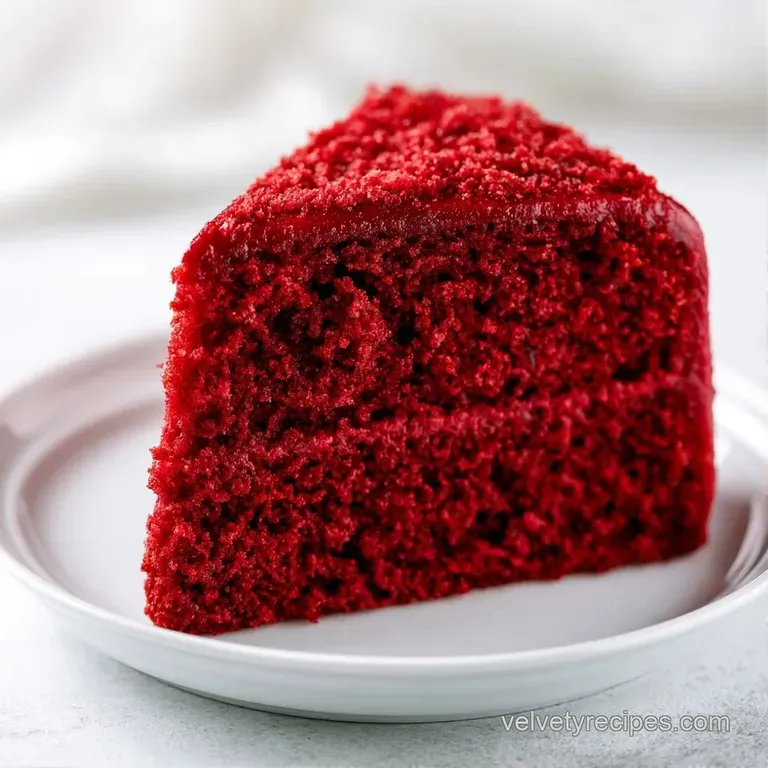
Even for experienced bakers, things can go sideways. Usually, it comes down to temperature or mixing technique. If you're pairing this with something like my Raspberry Iced Tea, you want the cake to be flawless to match that refreshing drink.
Troubleshooting Common Issues
| Issue | Solution |
|---|---|
| Why did my cake turn brown | This usually happens because the pH level shifted. If the batter isn't acidic enough, the red betalains in the beet juice break down. |
| Why is the texture dense | Overmixing is the main culprit. When you fold in the flour, stop as soon as you don't see any more white streaks. Overworking the gluten turns a velvety cake into a bready one. |
| Frosting sliding | Your cake was likely still slightly warm, or your butter was too melted. Ensure the layers are completely cold to the touch before frosting. |
Common Mistakes Checklist:
- ✓ Did you sift the cocoa powder? (Avoids bitter brown spots)
- ✓ Is the butter actually softened? (Prevents lumps in batter)
- ✓ Did you use cake flour? (All purpose makes it too dense)
- ✓ Did you cool the cakes fully? (Prevents frosting meltdown)
- ✓ Did you use full fat cream cheese? (Prevents runny frosting)
Adapting The Recipe
Depending on what's in your pantry, you might need to pivot. This Natural Red Velvet Cake Recipe is flexible, but some swaps change the outcome.
Vegan Version: Use a vegan butter substitute and replace eggs with "flax eggs" (1 tbsp ground flax + 3 tbsp water). Use a soy based buttermilk (soy milk + lemon juice). Note: The cake will be slightly denser and the color may be a shade darker.
Gluten-free Option: Substitute cake flour with a high-quality 1:1 gluten-free baking flour. I recommend adding 1/2 tsp of xanthan gum if your blend doesn't have it. This ensures the cake doesn't crumble when you slice it.
The Earthier Twist: If you love the taste of beets, use 1.5 cups of beet juice instead of 1 cup and reduce the sugar by 1/4 cup. It creates a more "adult" flavor profile that isn't as sugary.
Beet Powder Alternative: If you don't have juice, you can use 3 tbsp of beet powder dissolved in the buttermilk. This is a great shortcut, though the color can sometimes be slightly more "magenta" than "crimson".
Decision Shortcut: If you want a brighter red, add an extra teaspoon of lemon juice. If you want a richer chocolate taste, use Dutch processed cocoa. If you're short on time, bake in one 9x13 pan for 35-40 mins instead of layers.
Precision Checkpoints
- 1. The Creaming Stage
- Butter and sugar should look like pale, fluffy whipped cream (not just mixed).
- 2. The Batter Color
- The mix should be a uniform, vibrant red before the flour goes in.
- 3. The Internal Temp
- If you have a thermometer, the cake is done at 205-210°F.
Myths About Red Velvet
There's a lot of misinformation about this cake. Let's clear a few things up.
Myth: Red velvet is just chocolate cake. Truth: Not quite. While it has cocoa, the acidity and the specific flour type create a different chemical structure. It's more of a hybrid between a vanilla and a chocolate cake.
Myth: Beets make the cake taste like a vegetable. Truth: In this quantity, the beet juice acts more like a coloring agent and a moisturizer. Once the vanilla and cocoa are added, the "beet" taste disappears. It's very different from a Traditional Onion Cake, where the vegetable is the star.
Myth: You need professional dye for a deep red. Truth: As we've seen, the combination of beet juice and acid creates a stunning, natural crimson that looks far more sophisticated than the artificial stuff.
Storage And Waste Tips
This cake stays moist for a long time thanks to the beet juice and buttermilk.
Storage Guidelines: Store the frosted cake in an airtight container in the fridge for up to 5 days. Because of the cream cheese frosting, it cannot stay on the counter for more than a few hours. For longer storage, you can freeze the unfrosted layers.
Wrap them tightly in plastic wrap and foil; they'll last 3 months. Thaw in the fridge overnight before frosting.
Zero Waste Tips: If you made your own beet juice by roasting and blending beets, don't throw away the leftover pulp! You can stir the pulp into muffins or a veggie burger patty. If you have leftover frosting, freeze it in small dollops on a baking sheet, then move to a bag.
You can thaw them for a quick treat on toast or fruit.
Styling Your Final Cake
A cake this beautiful deserves a bit of flair. Since the red is so deep, you want to contrast it with the snowy white of the frosting.
For a "naked" look, apply a thin layer of frosting to the sides so the red layers peek through. If you want a more indulgent feel, pipe large swirls on top using a star tip. I love topping this with a few fresh raspberries or a sprinkle of cocoa powder.
Because the colors are so rich, avoid using too many different decorations. The contrast between the crimson cake and the velvety white frosting is the real star here. Slice the cake with a hot knife (dipped in hot water and wiped dry) to get those clean, sharp layers that show off the natural color.
Recipe FAQs
How to make a natural red velvet cake?
Combine beet juice with lemon juice, then fold dry ingredients into a creamed butter and buttermilk base. Bake the layers at 350°F (175°C) for 28 32 minutes.
What is the secret ingredient in natural red velvet cake?
Beet juice combined with lemon juice. This natural pairing locks in the red pigment without relying on artificial dyes.
What is real red velvet cake made of?
Cake flour, cocoa powder, buttermilk, and vinegar. This specific combination creates the signature tang and velvety crumb.
Is it true that red velvet cake is just chocolate cake with food coloring?
No, this is a common misconception. The distinct flavor and texture come from the chemical reaction between cocoa, buttermilk, and vinegar. If you enjoyed mastering this flavor balance, see how the same principle works in our red velvet bundt cake.
Why did my red velvet cake turn brown?
The pH level shifted during baking. When the batter lacks sufficient acidity, the red betalains in the beet juice break down and lose their color.
Why is the cake texture too dense?
Overmixing the flour into the batter. Stop stirring as soon as the white streaks disappear to prevent the gluten from making the cake bready.
How to prevent the frosting from sliding?
Cool the cake layers completely before frosting. Using layers that are still warm or butter that is too melted will cause the cream cheese frosting to slip.
Natural Red Velvet Cake